Home
| About
| Mine Tracker
| RSS
| Footer
▄▄▄▄▄▄▄▄▄▄▄▄▄▄▄▄▄▄▄▄▄▄▄▄▄▄▄▄▄▄▄▄▄▄▄▄▄▄▄▄▄▄▄▄▄▄▄▄▄▄▄▄▄▄▄▄▄▄▄▄▄▄▄▄▄▄▄▄▄▄▄▄▄▄▄▄▄▄▄▄▄▄▄▄▄▄▄▄▄▄▄▄▄▄▄▄
█▄▄░▄▄█░▄▄▀█░▄▄▀█▀▄▀█░▄▄███░▄▄▀█░▄▄▀█░▄▀███▄▄░▄▄█░▄▄▀█░▄▄▀█▀▄▀█░▄▄█░▄▄▀█░▄▄▀██▄██░███▄██▄░▄█░██░
███░███░▀▀▄█░▀▀░█░█▀█░▄▄███░▀▀░█░██░█░█░█████░███░▀▀▄█░▀▀░█░█▀█░▄▄█░▀▀░█░▄▄▀██░▄█░███░▄██░██░▀▀░
███░███▄█▄▄█▄██▄██▄██▄▄▄███▄██▄█▄██▄█▄▄██████░███▄█▄▄█▄██▄██▄██▄▄▄█▄██▄█▄▄▄▄█▄▄▄█▄▄█▄▄▄██▄██▀▀▀▄
▀▀▀▀▀▀▀▀▀▀▀▀▀▀▀▀▀▀▀▀▀▀▀▀▀▀▀▀▀▀▀▀▀▀▀▀▀▀▀▀▀▀▀▀▀▀▀▀▀▀▀▀▀▀▀▀▀▀▀▀▀▀▀▀▀▀▀▀▀▀▀▀▀▀▀▀▀▀▀▀▀▀▀▀▀▀▀▀▀▀▀▀▀▀▀▀
Norman Woodland; Inventor of the barcode
https://en.m.wikipedia.org/wiki/Norman_Joseph_Woodland
He drew dots and dashes in the sand similar to the shapes used in Morse code. After pulling them downward with his fingers, producing thin lines resulting from the dots and thick lines from the dashes, he came up with the concept of a two-dimensional, linear Morse code.
https://en.m.wikipedia.org/wiki/Norman_Joseph_Woodland
He drew dots and dashes in the sand similar to the shapes used in Morse code. After pulling them downward with his fingers, producing thin lines resulting from the dots and thick lines from the dashes, he came up with the concept of a two-dimensional, linear Morse code.
UPC's Go Back, Way Back
https://www.upc-search.org/?q=9780140125795
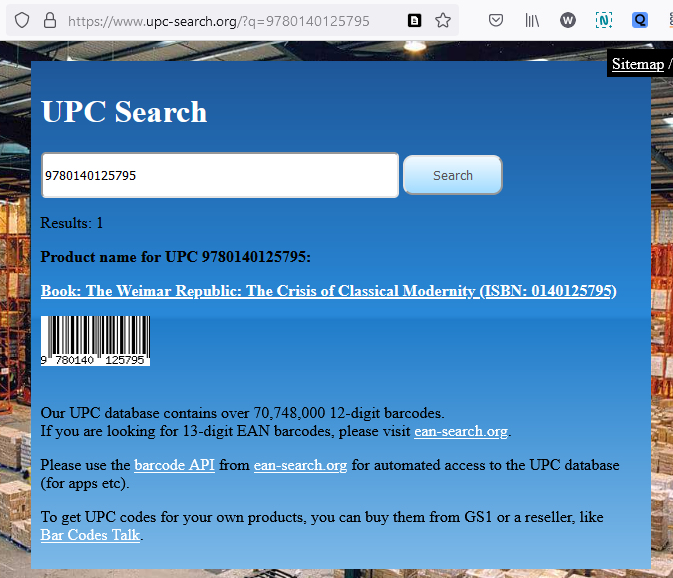
Not bad for a book first published by Penguin in 1991.
https://www.upc-search.org/?q=9780140125795
Not bad for a book first published by Penguin in 1991.
GS1 Digital Link Standard
https://www.gs1.org/standards/gs1-digital-link
The GS1 Digital Link standard extends the power and flexibility of GS1 identifiers by making them part of the web. That means that GS1 identifiers, such as the GTIN, are now a gateway to consumer information that strengthens brand loyalty, improved supply chain traceability information, business partner APIs, patient safety information and more. Where a URL typically points to a single, specific website, GS1 Digital Link enables connections to all types of business-to-business and business-to-consumer information. If you’re adding a QR code or NFC tag to a product, using the GS1 standard means you’re not only providing a URL for people to scan, you’re also carrying GS1 identifiers – the same identifiers relied upon throughout industry – and following a non-proprietary, no vendor-lock system. This means the brand owner remains in complete control but can still link to any number of information sources, all from one symbol, saving space and improving efficiency.
https://www.gs1.org/standards/gs1-digital-link
The GS1 Digital Link standard extends the power and flexibility of GS1 identifiers by making them part of the web. That means that GS1 identifiers, such as the GTIN, are now a gateway to consumer information that strengthens brand loyalty, improved supply chain traceability information, business partner APIs, patient safety information and more. Where a URL typically points to a single, specific website, GS1 Digital Link enables connections to all types of business-to-business and business-to-consumer information. If you’re adding a QR code or NFC tag to a product, using the GS1 standard means you’re not only providing a URL for people to scan, you’re also carrying GS1 identifiers – the same identifiers relied upon throughout industry – and following a non-proprietary, no vendor-lock system. This means the brand owner remains in complete control but can still link to any number of information sources, all from one symbol, saving space and improving efficiency.
Verified by GS1, Barcode Lookup
https://www.gs1.org/services/verified-by-gs1/

Product barcode lookup

https://www.gs1.org/services/verified-by-gs1/
Product barcode lookup
Universal Product Code (UPC)
https://en.wikipedia.org/wiki/Universal_Product_Code
UPC (technically refers to UPC-A) consists of 12 digits that are uniquely assigned to each trade item. Along with the related EAN barcode, the UPC is the barcode mainly used for scanning of trade items at the point of sale, per GS1 specifications.
https://en.wikipedia.org/wiki/Universal_Product_Code
UPC (technically refers to UPC-A) consists of 12 digits that are uniquely assigned to each trade item. Along with the related EAN barcode, the UPC is the barcode mainly used for scanning of trade items at the point of sale, per GS1 specifications.