Home
| About
| Mine Tracker
| RSS
| Next page
| Footer
▄▄▄▄▄▄▄▄▄▄▄▄▄▄▄▄▄▄▄▄▄▄▄▄▄▄▄▄▄▄▄▄▄▄▄▄▄▄▄▄▄▄▄▄▄▄▄▄▄▄▄▄▄▄▄▄▄▄▄▄▄▄▄▄▄▄▄▄▄▄▄▄▄▄▄▄▄▄▄▄▄▄▄▄▄▄▄▄▄▄▄▄▄▄▄▄
█▄▄░▄▄█░▄▄▀█░▄▄▀█▀▄▀█░▄▄███░▄▄▀█░▄▄▀█░▄▀███▄▄░▄▄█░▄▄▀█░▄▄▀█▀▄▀█░▄▄█░▄▄▀█░▄▄▀██▄██░███▄██▄░▄█░██░
███░███░▀▀▄█░▀▀░█░█▀█░▄▄███░▀▀░█░██░█░█░█████░███░▀▀▄█░▀▀░█░█▀█░▄▄█░▀▀░█░▄▄▀██░▄█░███░▄██░██░▀▀░
███░███▄█▄▄█▄██▄██▄██▄▄▄███▄██▄█▄██▄█▄▄██████░███▄█▄▄█▄██▄██▄██▄▄▄█▄██▄█▄▄▄▄█▄▄▄█▄▄█▄▄▄██▄██▀▀▀▄
▀▀▀▀▀▀▀▀▀▀▀▀▀▀▀▀▀▀▀▀▀▀▀▀▀▀▀▀▀▀▀▀▀▀▀▀▀▀▀▀▀▀▀▀▀▀▀▀▀▀▀▀▀▀▀▀▀▀▀▀▀▀▀▀▀▀▀▀▀▀▀▀▀▀▀▀▀▀▀▀▀▀▀▀▀▀▀▀▀▀▀▀▀▀▀▀
Changing Markets
https://changingmarkets.org/
The Changing Markets Foundation was formed to accelerate and scale up solutions to sustainability challenges by leveraging the power of markets. Working in partnership with NGOs, other foundations and research organisations, we create and support campaigns that shift market share away from unsustainable products and companies and towards environmentally and socially beneficial solutions. To address sustainability, we need to withdraw our support for those companies that are damaging society. If we do so at scale, we can create a self-reinforcing accelerating loop of positive change in global markets – change defined by the most sustainability-focused companies succeeding and forcing others to follow their lead.
https://changingmarkets.org/
The Changing Markets Foundation was formed to accelerate and scale up solutions to sustainability challenges by leveraging the power of markets. Working in partnership with NGOs, other foundations and research organisations, we create and support campaigns that shift market share away from unsustainable products and companies and towards environmentally and socially beneficial solutions. To address sustainability, we need to withdraw our support for those companies that are damaging society. If we do so at scale, we can create a self-reinforcing accelerating loop of positive change in global markets – change defined by the most sustainability-focused companies succeeding and forcing others to follow their lead.
Responsible Sourcing Tool
https://www.responsiblesourcingtool.org/
A wide variety of data was used to determine how to present the risk information you will see on this website on maps, in narrative form, and in charts and graphs. These data include global production and trade flows; numerous reports on human trafficking as well as reports focused on forced labor and/or child labor associated with the production of goods and the provision of services; and information about any countries in which trafficking-related problems have been reported in association with a particular supply chain or service.
https://www.responsiblesourcingtool.org/
A wide variety of data was used to determine how to present the risk information you will see on this website on maps, in narrative form, and in charts and graphs. These data include global production and trade flows; numerous reports on human trafficking as well as reports focused on forced labor and/or child labor associated with the production of goods and the provision of services; and information about any countries in which trafficking-related problems have been reported in association with a particular supply chain or service.
WWF, Key Data Elements (KDE) and Traceability
https://wwflac.awsassets.panda.org/downloads/triptico_kde_en.pdf
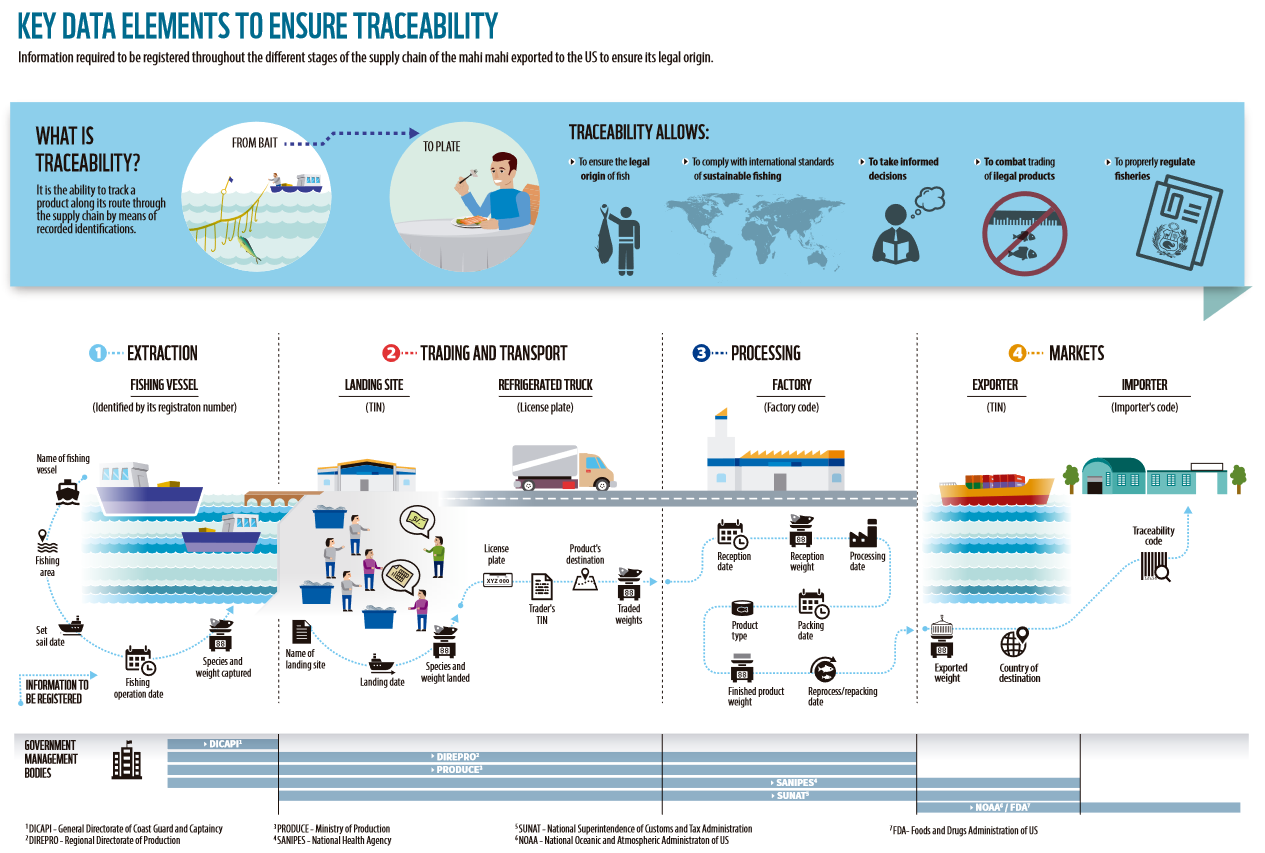
2 page infographic / PDF
https://wwflac.awsassets.panda.org/downloads/triptico_kde_en.pdf
2 page infographic / PDF
Report, Key Data Elements for Seafood: A Compilation of Resources
https://fishwise.org/wp-content/uploads/2018/03/2017.05.25_KDEs-for-Seafood-Compilation-of-Resources_Final_-1-1.pdf
1 The purpose of this document is to compile existing publicly available key data element (KDE) resources regarding production, product identification, and supply chain traceability for seafood into one central location. This document does not address the full scope of KDEs that can be collected for seafood products (e.g. KDEs regarding food safety are not included) nor does it seek to define or clarify KDE definitions or terms. This document is intended for informational purposes only and should not be construed as legal advice nor as providing recommendations of any kind. Readers should always refer to the original reference source for complete information and important contextual background such as the scope and objectives of the specific resource. FishWise cannot be held liable for the accuracy or completeness of this document.
https://fishwise.org/wp-content/uploads/2018/03/2017.05.25_KDEs-for-Seafood-Compilation-of-Resources_Final_-1-1.pdf
1 The purpose of this document is to compile existing publicly available key data element (KDE) resources regarding production, product identification, and supply chain traceability for seafood into one central location. This document does not address the full scope of KDEs that can be collected for seafood products (e.g. KDEs regarding food safety are not included) nor does it seek to define or clarify KDE definitions or terms. This document is intended for informational purposes only and should not be construed as legal advice nor as providing recommendations of any kind. Readers should always refer to the original reference source for complete information and important contextual background such as the scope and objectives of the specific resource. FishWise cannot be held liable for the accuracy or completeness of this document.
ZeroNorth, Company Website
https://zeronorth.com/
ZeroNorth leads the green transition of the shipping industry together with its partners and customers, using technology and turning data into actions to support the dual aims of maximising business while also supporting the drive towards decarbonisation.
https://zeronorth.com/
ZeroNorth leads the green transition of the shipping industry together with its partners and customers, using technology and turning data into actions to support the dual aims of maximising business while also supporting the drive towards decarbonisation.
Shippeo, Company Website
https://www.shippeo.com/
Using automation and artificial intelligence to provide real-time insights, enable better collaboration and unlock your supply chain’s full potential.
https://www.shippeo.com/
Using automation and artificial intelligence to provide real-time insights, enable better collaboration and unlock your supply chain’s full potential.
Ikea: subcontractors resort to forced labour in Belarus prisons
https://disclose.ngo/en/article/ikea-subcontractors-resort-forced-labour-in-belarus-prisons
Your reminder that SC transparancy is not just needed for countries outside of the West
https://disclose.ngo/en/article/ikea-subcontractors-resort-forced-labour-in-belarus-prisons
Your reminder that SC transparancy is not just needed for countries outside of the West
Report, Tea Certification Data Report 2020
https://www.rainforest-alliance.org/wp-content/uploads/2021/07/Tea-Certification-Data-Report-2020.pdf
The main goal of this report is to present the scope and scale of the Rainforest Alliance and UTZ tea certification programs in 2020 – calendar year. The report is created to inform our stakeholders and is part of our commitment to transparency. The report focuses on the key indicators related to:
• Market uptake: sales of Rainforest Alliance Certified and UTZ certified tea;
• Program reach: estimated Rainforest Alliance Certified and UTZ certified tea production, premiums being paid and multi-certification.
https://www.rainforest-alliance.org/wp-content/uploads/2021/07/Tea-Certification-Data-Report-2020.pdf
The main goal of this report is to present the scope and scale of the Rainforest Alliance and UTZ tea certification programs in 2020 – calendar year. The report is created to inform our stakeholders and is part of our commitment to transparency. The report focuses on the key indicators related to:
• Market uptake: sales of Rainforest Alliance Certified and UTZ certified tea;
• Program reach: estimated Rainforest Alliance Certified and UTZ certified tea production, premiums being paid and multi-certification.
Rainforest Alliance Tea Traceability Webinar Slides
https://www.rainforest-alliance.org/wp-content/uploads/2022/04/RA-Tea-Traceability-in-MultiTrace-Webinar-April-2022.pdf

Slides from a Rainforest Alliance presentation on tracebility in tea supply chains. Targeted audience is to RA certificate holders. Full traceability is a requirement of certification since July 2022.
https://www.rainforest-alliance.org/wp-content/uploads/2022/04/RA-Tea-Traceability-in-MultiTrace-Webinar-April-2022.pdf
Slides from a Rainforest Alliance presentation on tracebility in tea supply chains. Targeted audience is to RA certificate holders. Full traceability is a requirement of certification since July 2022.
Tea Selling Mark Guidance
https://www.rainforest-alliance.org/wp-content/uploads/2022/09/RA-G-MT-1-V1-Tea-Selling-Marks.pdf
A selling mark is the name under which the factory sells its tea. This may or may not be the same name as the garden mark (noting that smallholders do not have garden marks – garden marks are associated with estates and origins where tea was introduced/managed under a British system). Note: Buyers often use the term “garden mark”, or just “mark” as shorthand for selling mark. A selling mark is:
• Printed on the tea sacks shipped from farm CHs factories or bulking factories,
• Will be on purchase orders, contracts, invoices etc.,
• Is used in auction catalogues,
• Is used in the ERP systems of buyers, if they have one,
• In the Rainforest Alliance traceability platform selling mark is a key identifier in the
footprint together with variety and producer.
• The identity or "brand" of the tea as produced/packed/sold into the marketplace. It can denote the origin/factory/quality/type of the tea in question. Multiple grades (leaf quality / size) can be assigned under one Selling Mark.
A selling mark can be:
• The name of the garden producing the tea
• The name of the village/group/community producing the tea
• The factory name/location
• Part of the certificate name
https://www.rainforest-alliance.org/wp-content/uploads/2022/09/RA-G-MT-1-V1-Tea-Selling-Marks.pdf
A selling mark is the name under which the factory sells its tea. This may or may not be the same name as the garden mark (noting that smallholders do not have garden marks – garden marks are associated with estates and origins where tea was introduced/managed under a British system). Note: Buyers often use the term “garden mark”, or just “mark” as shorthand for selling mark. A selling mark is:
• Printed on the tea sacks shipped from farm CHs factories or bulking factories,
• Will be on purchase orders, contracts, invoices etc.,
• Is used in auction catalogues,
• Is used in the ERP systems of buyers, if they have one,
• In the Rainforest Alliance traceability platform selling mark is a key identifier in the
footprint together with variety and producer.
• The identity or "brand" of the tea as produced/packed/sold into the marketplace. It can denote the origin/factory/quality/type of the tea in question. Multiple grades (leaf quality / size) can be assigned under one Selling Mark.
A selling mark can be:
• The name of the garden producing the tea
• The name of the village/group/community producing the tea
• The factory name/location
• Part of the certificate name
Palm Traceability at Cargill
https://www.cargill.com/page/traceability

Traceability is a relatively expensive, heavy-duty, approach to supply chain transaparancy that adds much administrative overhead to all actors in a supply chain. Small wonder then that a company like Cargill will roll out only for their most risky crop: palm oil.

https://www.cargill.com/page/traceability
Traceability is a relatively expensive, heavy-duty, approach to supply chain transaparancy that adds much administrative overhead to all actors in a supply chain. Small wonder then that a company like Cargill will roll out only for their most risky crop: palm oil.
Free online platform aims to 'democratise' supply chain data
https://www.cips.org/supply-management/news/2022/november/free-online-platform-aims-to-democratise-supply-chain-data/
“There are enormous sets of data out there, locked away and considered proprietary information, or only available through inaccessible formats like PDFs or tables, embedded in websites, or it's in pay to play databases and product management systems. Not everyone has free and equal access to that data. We're opening up that data and enabling access to all,”
https://www.cips.org/supply-management/news/2022/november/free-online-platform-aims-to-democratise-supply-chain-data/
“There are enormous sets of data out there, locked away and considered proprietary information, or only available through inaccessible formats like PDFs or tables, embedded in websites, or it's in pay to play databases and product management systems. Not everyone has free and equal access to that data. We're opening up that data and enabling access to all,”
Notes, Open Supply Hub webinar
https://info.opensupplyhub.org/

Webinar Open Supply Hub (OSH)
Notes taken during webinar on November 16 2022. I am a huge fan of this project.
What is OSH
Open db of hunderds of thousands facilities
OSH Uses deduplication algo's and human checks and balances for data quality
Why OSH?
Supply chains are complex and opaque. This hides problems of our time (modern slavery, GHG emmisions, deforestation).
What's problem does OSH try to solve?
Data is messy, no universal facility ID's, information is inaccessible, gaps in coverage.
This leads to inequalities on who is allowed to work on supply chain improvement.
OSH solves these problems.
Reliable interoperable dataset.
Living in once common registry (open data)
Enables global collaboration
OSH replaces Open Apparel Registry (OAR). Data and logins have been transferred.
Focus on cross-sector overlaps at facility level.
138249 Facilties currently identified, excel download available. Tools allows to cross-reference facilities across datasets.
Uploads can be done manually by uploading CSV or Excel, or by API. Facility owners can claim their own location(s) and add information.
Country, name and adress are required. Sector/product, Facility/processing type, number of workers and parent company are optional.
Adresses are first geocoded, matched against the existing facilities and added, rejected, published as additional contribution on an existing facility profile.
New facilities are given a unique ID, for instance: US2020349V8BVNT.
How to Search OSH: https://info.opensupplyhub.org/resources/how-to-search
Companies are encouraging their suppliers to claim their facility.
It is about opening up and democratizing supply chains for social good.
https://info.opensupplyhub.org/
Webinar Open Supply Hub (OSH)
Notes taken during webinar on November 16 2022. I am a huge fan of this project.
What is OSH
Open db of hunderds of thousands facilities
OSH Uses deduplication algo's and human checks and balances for data quality
Why OSH?
Supply chains are complex and opaque. This hides problems of our time (modern slavery, GHG emmisions, deforestation).
What's problem does OSH try to solve?
Data is messy, no universal facility ID's, information is inaccessible, gaps in coverage.
This leads to inequalities on who is allowed to work on supply chain improvement.
OSH solves these problems.
Reliable interoperable dataset.
Living in once common registry (open data)
Enables global collaboration
OSH replaces Open Apparel Registry (OAR). Data and logins have been transferred.
Focus on cross-sector overlaps at facility level.
138249 Facilties currently identified, excel download available. Tools allows to cross-reference facilities across datasets.
Uploads can be done manually by uploading CSV or Excel, or by API. Facility owners can claim their own location(s) and add information.
Country, name and adress are required. Sector/product, Facility/processing type, number of workers and parent company are optional.
Adresses are first geocoded, matched against the existing facilities and added, rejected, published as additional contribution on an existing facility profile.
New facilities are given a unique ID, for instance: US2020349V8BVNT.
How to Search OSH: https://info.opensupplyhub.org/resources/how-to-search
Companies are encouraging their suppliers to claim their facility.
It is about opening up and democratizing supply chains for social good.
HIGG, Company Website
https://higg.com/
Higg is an integrated software platform that helps you take responsibility for your entire impact – from materials to products, from factories to stores, from carbon emissions to working conditions.
https://higg.com/
Higg is an integrated software platform that helps you take responsibility for your entire impact – from materials to products, from factories to stores, from carbon emissions to working conditions.
Article, Cyborg Trucking
https://www.phenomenalworld.org/interviews/karen-levy/
In her new book Data Driven: Truckers, Technology, and the New Workplace Surveillance, Karen Levy of Cornell University offers an in-depth view of the US long haul trucking industry, explaining why so few workers today are willing to take up what was once considered a respectable, skilled job. Decimated by waves of deregulation and union-busting since the 1970s, a once highly organized and well-paid workforce has fragmented over time, subjected to the intensifying discipline of markets and management.
https://www.phenomenalworld.org/interviews/karen-levy/
In her new book Data Driven: Truckers, Technology, and the New Workplace Surveillance, Karen Levy of Cornell University offers an in-depth view of the US long haul trucking industry, explaining why so few workers today are willing to take up what was once considered a respectable, skilled job. Decimated by waves of deregulation and union-busting since the 1970s, a once highly organized and well-paid workforce has fragmented over time, subjected to the intensifying discipline of markets and management.
Climate Trace
https://climatetrace.org/map

We harness satellite imagery and other forms of remote sensing, artificial intelligence, and collective data science expertise to track human-caused GHG emissions with unprecedented detail and speed. Climate TRACE’s emissions inventory is the world’s first comprehensive accounting of GHG emissions based primarily on direct, independent observation. Our innovative, open, and accessible approach relies on advances in technology to fill critical knowledge gaps for all decision makers that rely on the patchwork system of self-reporting that serves as the basis for most existing emissions inventories.
https://climatetrace.org/map
We harness satellite imagery and other forms of remote sensing, artificial intelligence, and collective data science expertise to track human-caused GHG emissions with unprecedented detail and speed. Climate TRACE’s emissions inventory is the world’s first comprehensive accounting of GHG emissions based primarily on direct, independent observation. Our innovative, open, and accessible approach relies on advances in technology to fill critical knowledge gaps for all decision makers that rely on the patchwork system of self-reporting that serves as the basis for most existing emissions inventories.
Article, Indonesia’s electric vehicle batteries dream has a dirty nickel problem
https://www.brookings.edu/blog/up-front/2022/09/21/indonesias-electric-vehicle-batteries-dream-has-a-dirty-nickel-problem/
Indonesia—the world’s largest nickel miner—is making moves to become a key player in the electric vehicle supply chain. Most of Indonesia’s nickel output is currently Class 2 nickel, a low-purity type used for stainless steel. The country’s government and the mining sector are determined to transform its nickel industry to meet the rising demand for Class 1 nickel, a crucial component for electric vehicle (EV) batteries. EVs are widely viewed as a pillar of the transition toward renewable energy sources since they typically have a smaller carbon footprint over their lifespan than gasoline-powered vehicles. These efforts have seen some success to date, with the EV and battery manufacturing sector making investments in the country’s downstream industry (in other words, investment in end-uses of nickel, such as EV batteries), including an EV battery cell plant near Jakarta.
https://www.brookings.edu/blog/up-front/2022/09/21/indonesias-electric-vehicle-batteries-dream-has-a-dirty-nickel-problem/
Indonesia—the world’s largest nickel miner—is making moves to become a key player in the electric vehicle supply chain. Most of Indonesia’s nickel output is currently Class 2 nickel, a low-purity type used for stainless steel. The country’s government and the mining sector are determined to transform its nickel industry to meet the rising demand for Class 1 nickel, a crucial component for electric vehicle (EV) batteries. EVs are widely viewed as a pillar of the transition toward renewable energy sources since they typically have a smaller carbon footprint over their lifespan than gasoline-powered vehicles. These efforts have seen some success to date, with the EV and battery manufacturing sector making investments in the country’s downstream industry (in other words, investment in end-uses of nickel, such as EV batteries), including an EV battery cell plant near Jakarta.
Article, Indonesia’s claim banning nickel...
https://theconversation.com/indonesias-claim-that-banning-nickel-exports-spurs-downstreaming-is-questionable-180229
The Indonesian government has claimed that its raw nickel export ban, which started in January 2021, has shown positive impacts after seeing increases in mining investments and exports of nickel-derived products. This statement seems to be premature, considering that the government has failed to disclose the data that can support this argument. The Indonesian government has long desired to add high value to domestic mining products, especially nickel, through downstreaming. Nickel is a major component in electric batteries, which have become increasingly important due to the rising production of various gadgets and electric cars that require energy storage.
https://theconversation.com/indonesias-claim-that-banning-nickel-exports-spurs-downstreaming-is-questionable-180229
The Indonesian government has claimed that its raw nickel export ban, which started in January 2021, has shown positive impacts after seeing increases in mining investments and exports of nickel-derived products. This statement seems to be premature, considering that the government has failed to disclose the data that can support this argument. The Indonesian government has long desired to add high value to domestic mining products, especially nickel, through downstreaming. Nickel is a major component in electric batteries, which have become increasingly important due to the rising production of various gadgets and electric cars that require energy storage.
TradeLens, Company Website
https://www.maersk.com/digital-solutions/tradelens
Transform your container logistics by freeing it from legacy data systems, manual document handling and poor visibility.
https://www.maersk.com/digital-solutions/tradelens
Transform your container logistics by freeing it from legacy data systems, manual document handling and poor visibility.
Article, A data-sharing approach for supply chain visibility
https://www.brookings.edu/techstream/a-data-sharing-approach-for-greater-supply-chain-visibility/
Amid the lingering effects of the COVID-19 pandemic, rising inflation, the war in Ukraine, geopolitical tensions in East Asia, and more frequent extreme weather events, manufacturing supply chains continue to struggle in bringing goods when and where they are needed. These disruptions have affected all aspects of end-to-end supply chains, producing demand shifts, supply and manufacturing capacity reductions, and coordination failures. Prior to 2020, most supply chain designs lacked the resilience needed to cope with these disruptions, and, in response, companies have tried to diversify their sourcing and increase inventories and manufacturing capacity, all of which have led to increased cost. Now more than ever, companies need a new paradigm for cost-competitive resilience if they are to redesign supply chains while maintaining their competitive advantages. Firms are increasingly turning toward better contingency planning, improving organizational readiness and worker flexibility, automation, and building more collaborative relationships with suppliers to improve supply chain resilience.
https://www.brookings.edu/techstream/a-data-sharing-approach-for-greater-supply-chain-visibility/
Amid the lingering effects of the COVID-19 pandemic, rising inflation, the war in Ukraine, geopolitical tensions in East Asia, and more frequent extreme weather events, manufacturing supply chains continue to struggle in bringing goods when and where they are needed. These disruptions have affected all aspects of end-to-end supply chains, producing demand shifts, supply and manufacturing capacity reductions, and coordination failures. Prior to 2020, most supply chain designs lacked the resilience needed to cope with these disruptions, and, in response, companies have tried to diversify their sourcing and increase inventories and manufacturing capacity, all of which have led to increased cost. Now more than ever, companies need a new paradigm for cost-competitive resilience if they are to redesign supply chains while maintaining their competitive advantages. Firms are increasingly turning toward better contingency planning, improving organizational readiness and worker flexibility, automation, and building more collaborative relationships with suppliers to improve supply chain resilience.
Article, Six ways to improve global supply chains
https://www.brookings.edu/research/six-ways-to-improve-global-supply-chains/
In this paper, I outline six ways to improve global supply chains: Boosting domestic production through on-shoring and near-shoring
Easing transportation jams
Prioritizing public health
Managing labor shortages
Fighting anti-competitive practices
Mitigating geopolitical tensions
https://www.brookings.edu/research/six-ways-to-improve-global-supply-chains/
In this paper, I outline six ways to improve global supply chains: Boosting domestic production through on-shoring and near-shoring
Easing transportation jams
Prioritizing public health
Managing labor shortages
Fighting anti-competitive practices
Mitigating geopolitical tensions
Altana, Company website
https://www.altana.ai/
Through our unique federated learning platform, the Altana Atlas learns from both public and non-public data that cannot be directly pooled. This creates unprecedented visibility across the supply chain that was previously impossible because of data sovereignty, privacy, and intellectual property protections.
https://www.altana.ai/
Through our unique federated learning platform, the Altana Atlas learns from both public and non-public data that cannot be directly pooled. This creates unprecedented visibility across the supply chain that was previously impossible because of data sovereignty, privacy, and intellectual property protections.
Book: Fashionopolis
https://www.penguinrandomhouse.com/books/554229/fashionopolis-by-dana-thomas/

Historically, the apparel trade has exploited labor, the environment, and intellectual property—and in the last three decades, with the simultaneous unfurling of fast fashion, globalization, and the tech revolution, those abuses have multiplied exponentially, primarily out of view. We are in dire need of an entirely new human-scale model.
https://www.penguinrandomhouse.com/books/554229/fashionopolis-by-dana-thomas/
Historically, the apparel trade has exploited labor, the environment, and intellectual property—and in the last three decades, with the simultaneous unfurling of fast fashion, globalization, and the tech revolution, those abuses have multiplied exponentially, primarily out of view. We are in dire need of an entirely new human-scale model.
Researching Supply Chains
https://libguides.rutgers.edu/supply_chain
Guide to approaches and secondary resources for researching supply chains from Rutger University Library
https://libguides.rutgers.edu/supply_chain
Guide to approaches and secondary resources for researching supply chains from Rutger University Library
Ship Visitor
https://www.shipvisitor.org/
The only mobile app to enable organisations to plan, deliver and report on ship visits and port chaplaincy.
https://www.shipvisitor.org/
The only mobile app to enable organisations to plan, deliver and report on ship visits and port chaplaincy.
Noodle AI, Company Website
https://noodle.ai/
The Noodle.ai system of intelligence manages supply chain risk to conquer hidden waste and boost profits.
https://noodle.ai/
The Noodle.ai system of intelligence manages supply chain risk to conquer hidden waste and boost profits.
Paper, Revealing and concealing power in the sustainable tea
supply chain
https://research-api.cbs.dk/ws/files/69553351/matthew_archer_et_al_its_up_to_the_market_to_decide_publishersversion.pdf
In 2007, Unilever, the world’s largest tea company, announced plans to source its entire tea supply sustainably, beginning with the certification of its tea producers in East Africa to Rainforest Alliance standards. As a major buyer of Kenyan tea, Unilever’s decision pushed tea producers across Kenya to subscribe to Rainforest Alliance’s sustainable agriculture standard in order to maintain access to the global tea market; according to a 2018 report, over 85% of Kenya’s tea producers were Rainforest Alliance certified. Drawing on ethnographic material among supply chain actors across different sites along the sustainable tea value chain (from those designing and disseminating standards to tea traders to smallholder tea farmers), this article examines how these actors frequently attributed the power to determine the outcomes of certification to a faceless ‘market’. Deferring to ‘the market’, we observe, served primarily to mask theoutsized power of lead firms (in particular Unilever) to determine conditions of tea production and trade. At the same time, ‘the market’ was also in some cases qualified by our interlocutors, allowing them implicitly (and at times explicitly) to reveal power and give it a face.
https://research-api.cbs.dk/ws/files/69553351/matthew_archer_et_al_its_up_to_the_market_to_decide_publishersversion.pdf
In 2007, Unilever, the world’s largest tea company, announced plans to source its entire tea supply sustainably, beginning with the certification of its tea producers in East Africa to Rainforest Alliance standards. As a major buyer of Kenyan tea, Unilever’s decision pushed tea producers across Kenya to subscribe to Rainforest Alliance’s sustainable agriculture standard in order to maintain access to the global tea market; according to a 2018 report, over 85% of Kenya’s tea producers were Rainforest Alliance certified. Drawing on ethnographic material among supply chain actors across different sites along the sustainable tea value chain (from those designing and disseminating standards to tea traders to smallholder tea farmers), this article examines how these actors frequently attributed the power to determine the outcomes of certification to a faceless ‘market’. Deferring to ‘the market’, we observe, served primarily to mask theoutsized power of lead firms (in particular Unilever) to determine conditions of tea production and trade. At the same time, ‘the market’ was also in some cases qualified by our interlocutors, allowing them implicitly (and at times explicitly) to reveal power and give it a face.
Report, Certified Unilever Tea Small Cup, Big Difference? (2011)
https://papers.ssrn.com/sol3/papers.cfm?abstract_id=1961574
For this study one hundred tea workers were interviewed on a total of eight tea plantation companies, all supplying tea to Unilever. Seven of these plantations are located in India and the remaining plantation concerns Unilever?s own tea plantation in Kenya. It was found that working conditions on tea estates that supply Unilever are problematic despite having been certified by the sustainability standard system RA. This in turn raises concerns about the effectiveness and credibility of this standard. On all the RA certified estates in India there were issues with wages either including too few benefits or partly being paid in kind and not in cash. Also women workers are being discriminated against (promotion, benefits), many casual workers remain permanently casual and workers are applying pesticides without protective gear. Moreover, most of these issues constitute violations of Indian labour legislation and ILO standards as well as Unilever?s own standards for suppliers. All of them are violations of RA standards and should lead to withdrawal of RA certification.
https://papers.ssrn.com/sol3/papers.cfm?abstract_id=1961574
For this study one hundred tea workers were interviewed on a total of eight tea plantation companies, all supplying tea to Unilever. Seven of these plantations are located in India and the remaining plantation concerns Unilever?s own tea plantation in Kenya. It was found that working conditions on tea estates that supply Unilever are problematic despite having been certified by the sustainability standard system RA. This in turn raises concerns about the effectiveness and credibility of this standard. On all the RA certified estates in India there were issues with wages either including too few benefits or partly being paid in kind and not in cash. Also women workers are being discriminated against (promotion, benefits), many casual workers remain permanently casual and workers are applying pesticides without protective gear. Moreover, most of these issues constitute violations of Indian labour legislation and ILO standards as well as Unilever?s own standards for suppliers. All of them are violations of RA standards and should lead to withdrawal of RA certification.
Paper, Sustainable Tea at Unilever (2012)
https://blogs.ubc.ca/courseblogsis_ubc_ba_504_001_2014w1-2_45258-sis_ubc_ba_504_001_2014w1-2_45258/files/2015/08/Sustainable-Tea-at-Unilever.pdf
In 2010, Unilever announced its commitment to a new “Sustainable Living Plan,” a document that set wide-ranging, companywide goals for improving the health and well-being of consumers, reducing environmental impact, and, perhaps most ambitiously, sourcing 100% of agricultural raw materials sustainably by 2020. Such a goal implied a massive transformation of a supply chain that sourced close to 8 million tons of commodities across 50 different crops. Unilever CEO Paul Polman believed that the company’s ambitious goals could drive savings, product innovation, and differentiation across the company’s portfolio of products.
https://blogs.ubc.ca/courseblogsis_ubc_ba_504_001_2014w1-2_45258-sis_ubc_ba_504_001_2014w1-2_45258/files/2015/08/Sustainable-Tea-at-Unilever.pdf
In 2010, Unilever announced its commitment to a new “Sustainable Living Plan,” a document that set wide-ranging, companywide goals for improving the health and well-being of consumers, reducing environmental impact, and, perhaps most ambitiously, sourcing 100% of agricultural raw materials sustainably by 2020. Such a goal implied a massive transformation of a supply chain that sourced close to 8 million tons of commodities across 50 different crops. Unilever CEO Paul Polman believed that the company’s ambitious goals could drive savings, product innovation, and differentiation across the company’s portfolio of products.
Polycrisis Continued
https://adamtooze.substack.com/p/chartbook-165-polycrisis-thinking
Continued from earlier.
https://adamtooze.substack.com/p/chartbook-165-polycrisis-thinking
Continued from earlier.
Book, The Outlaw Ocean
https://en.wikipedia.org/wiki/The_Outlaw_Ocean
The dark underbelly of supply chains
https://en.wikipedia.org/wiki/The_Outlaw_Ocean
The dark underbelly of supply chains
Why are global commodities so much cheaper in poorer countries?
https://ask.metafilter.com/367917/Why-are-global-commodities-so-much-cheaper-in-poorer-countries
For example: In San Francisco, USA, a gallon of gas is $5.50 and a seared tuna entree at an upscale restaurant is $35. In Medellin, Colombia, the respective prices are $2.00 and $7. Gas and tuna not local goods, there's a global market for them. Why are they cheaper in poorer countries?
https://ask.metafilter.com/367917/Why-are-global-commodities-so-much-cheaper-in-poorer-countries
For example: In San Francisco, USA, a gallon of gas is $5.50 and a seared tuna entree at an upscale restaurant is $35. In Medellin, Colombia, the respective prices are $2.00 and $7. Gas and tuna not local goods, there's a global market for them. Why are they cheaper in poorer countries?
Implementing Quality and Traceability Initiatives among Smallholder Tea Producers in Southern India
https://www.researchgate.net/publication/242185436_Implementing_Quality_and_Traceability_Initiatives_among_Smallholder_Tea_Producers_in_Southern_India

Tea production in the Nilgiri Hills of southern India is undergoing considerable change. The fall in global tea prices since 1998 has had devastating impacts in the Nilgiris, where the majority of tea is produced by peasant farmers on landholdings of less than one hectare. Prices paid for smallholder tea have declined by 47% against an average national decline of only 26% since 1998.
https://www.researchgate.net/publication/242185436_Implementing_Quality_and_Traceability_Initiatives_among_Smallholder_Tea_Producers_in_Southern_India
Tea production in the Nilgiri Hills of southern India is undergoing considerable change. The fall in global tea prices since 1998 has had devastating impacts in the Nilgiris, where the majority of tea is produced by peasant farmers on landholdings of less than one hectare. Prices paid for smallholder tea have declined by 47% against an average national decline of only 26% since 1998.
Creating Value for Competitive Advantage in Supply Chain Relationships: The Case of the Sri Lankan T
https://www.researchgate.net/publication/23510254_Creating_Value_for_Competitive_Advantage_in_Supply_Chain_Relationships_The_Case_of_the_Sri_Lankan_Tea_Industry

This research uses a case study approach to identify the specific role of information and communication on exporter/importer relationships within the tea supply chain, and the impact on value addition, channel member performance and competitive advantage in the Sri Lankan tea industry.
https://www.researchgate.net/publication/23510254_Creating_Value_for_Competitive_Advantage_in_Supply_Chain_Relationships_The_Case_of_the_Sri_Lankan_Tea_Industry
This research uses a case study approach to identify the specific role of information and communication on exporter/importer relationships within the tea supply chain, and the impact on value addition, channel member performance and competitive advantage in the Sri Lankan tea industry.
Oritain, Company Website
https://oritain.com/
The Oritain method traces actual products back to their true origin using advanced science. The Oritain method is robust and provides reassurance that other traceability services cannot.
https://oritain.com/
The Oritain method traces actual products back to their true origin using advanced science. The Oritain method is robust and provides reassurance that other traceability services cannot.
Article, Food fraud and counterfeit cotton: the detectives untangling the global supply chain
https://www.theguardian.com/news/2021/sep/16/food-fraud-counterfeit-cotton-detectives-untangling-global-supply-chain
Amid the complex web of international trade, proving the authenticity of a product can be near-impossible. But one company is taking the search to the atomic level
https://www.theguardian.com/news/2021/sep/16/food-fraud-counterfeit-cotton-detectives-untangling-global-supply-chain
Amid the complex web of international trade, proving the authenticity of a product can be near-impossible. But one company is taking the search to the atomic level
Rebranding Russion Oil as Malaysian
https://twitter.com/JavierBlas/status/1584513421029957632

China imported a record of ~1 million b/d of Malaysian crude in Sept. That's nearly **double** the real output of Malaysia. The reality? Re-branding of Russian, Iranian and Venezuelan oil.
https://twitter.com/JavierBlas/status/1584513421029957632
China imported a record of ~1 million b/d of Malaysian crude in Sept. That's nearly **double** the real output of Malaysia. The reality? Re-branding of Russian, Iranian and Venezuelan oil.
Korean auto giant Hyundai investigating child labor in its U.S. supply chain
https://www.reuters.com/business/autos-transportation/exclusive-korean-auto-giant-hyundai-investigating-child-labor-its-us-supply-2022-10-19/
Hyundai Motor Co (005380.KS), Korea's top automaker, is investigating child labor violations in its U.S. supply chain and plans to "sever ties" with Hyundai suppliers in Alabama found to have relied on underage workers, the company's global chief operating officer Jose Munoz told Reuters on Wednesday.
https://www.reuters.com/business/autos-transportation/exclusive-korean-auto-giant-hyundai-investigating-child-labor-its-us-supply-2022-10-19/
Hyundai Motor Co (005380.KS), Korea's top automaker, is investigating child labor violations in its U.S. supply chain and plans to "sever ties" with Hyundai suppliers in Alabama found to have relied on underage workers, the company's global chief operating officer Jose Munoz told Reuters on Wednesday.
ShipIn, Company Website
https://shipin.ai/
run your fleet. By turning camera footage into events and on-going analytics, you get better visibility, productivity and safety.
https://shipin.ai/
run your fleet. By turning camera footage into events and on-going analytics, you get better visibility, productivity and safety.
Article, Four years into the trade war, are the US and China decoupling?
https://www.piie.com/blogs/realtime-economics/four-years-trade-war-are-us-and-china-decoupling
For many decades China and the United States have been locked in such a tight economic embrace that it is challenging to quantify whether, how, or why the embrace may be weakening. Are the mounting tensions, bordering on hostility, between the two superpowers causing their economies to “decouple”?
https://www.piie.com/blogs/realtime-economics/four-years-trade-war-are-us-and-china-decoupling
For many decades China and the United States have been locked in such a tight economic embrace that it is challenging to quantify whether, how, or why the embrace may be weakening. Are the mounting tensions, bordering on hostility, between the two superpowers causing their economies to “decouple”?
Article, Murder at Sea
https://hakaimagazine.com/features/murder-at-sea/
When a grainy video of a grisly mass shooting on the high seas surfaced, one determined detective and a host of NGOs went on a quest for justice
https://hakaimagazine.com/features/murder-at-sea/
When a grainy video of a grisly mass shooting on the high seas surfaced, one determined detective and a host of NGOs went on a quest for justice
Tetley's Supplier List 2021
https://www.tetley.co.uk/sites/g/files/gfwrlq181/files/2021-07/Tetley%20UK%20Supplier%20List%20%20updated%20as%20of%204th%20June%202021.pdf
"The link below lists all producers we have sourced tea from. We may have not bought from all of these producers in the past year, however we would consider them as part of our supply chain so long as they meet our sustainability and quality requirements."
VIA
https://www.tetley.co.uk/sites/g/files/gfwrlq181/files/2021-07/Tetley%20UK%20Supplier%20List%20%20updated%20as%20of%204th%20June%202021.pdf
"The link below lists all producers we have sourced tea from. We may have not bought from all of these producers in the past year, however we would consider them as part of our supply chain so long as they meet our sustainability and quality requirements."
VIA
M&S Interactive Supplier Map
https://interactivemap.marksandspencer.com/
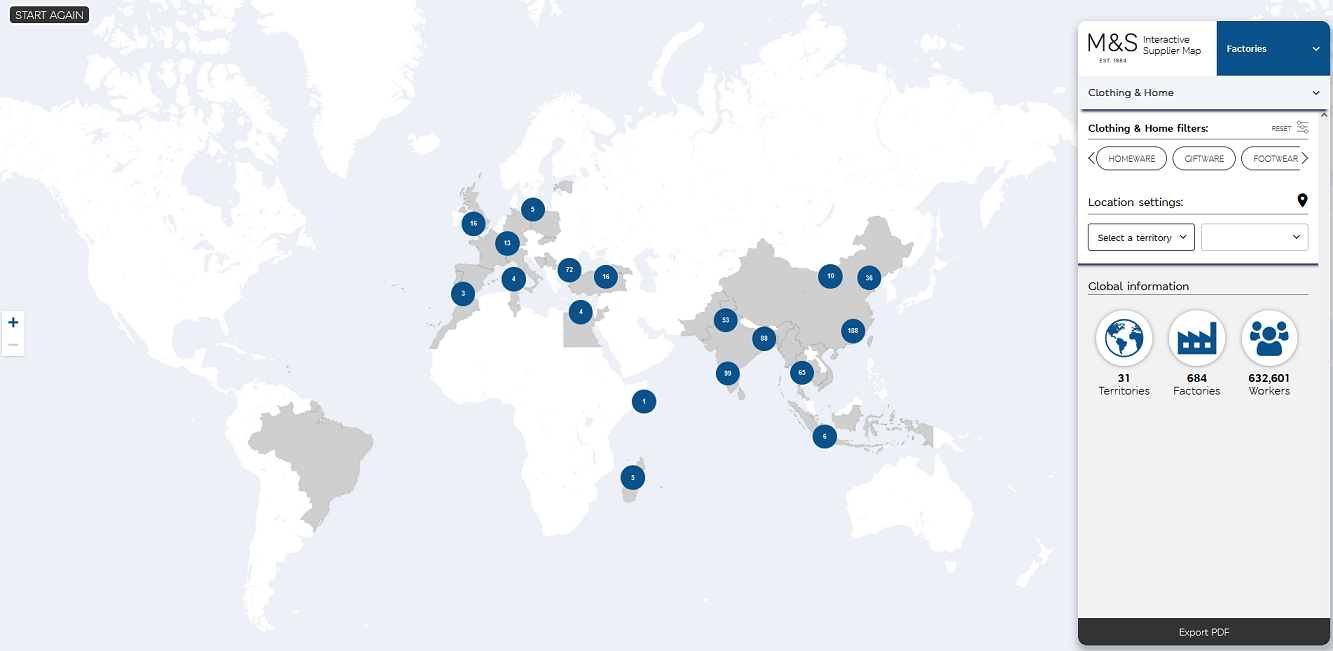
The M&S interactive supplier map is really something. Fresh data, product type filters, adresses, gender distributions, trade union presence, product informtion, certifications, it's all there.
https://interactivemap.marksandspencer.com/
The M&S interactive supplier map is really something. Fresh data, product type filters, adresses, gender distributions, trade union presence, product informtion, certifications, it's all there.
Unilever Supplier Lists
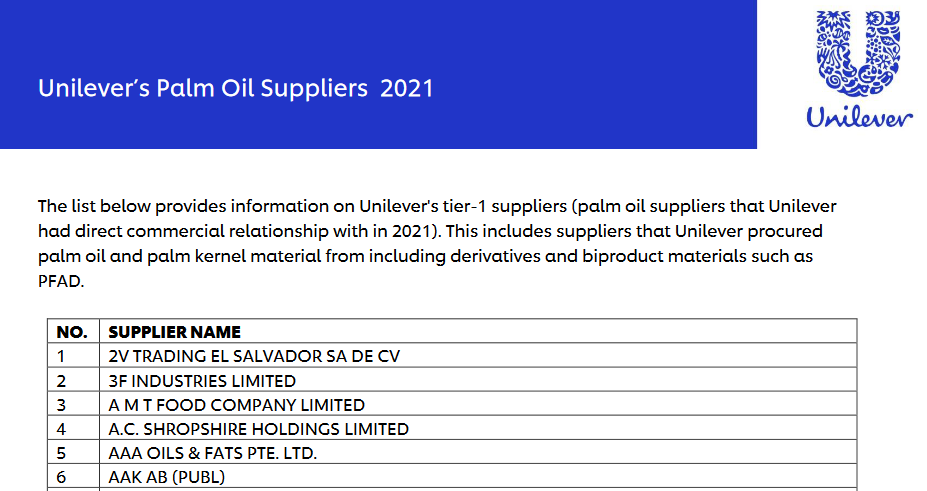
Know-the-Chain's scorecard for food giant Unilever says approvingly that the company is "disclosing more information on its forced labor policies and practices than its peers across all themes". When looking at the actual supplier lists the company provides, it shows how low the bar is: it will have company names but no contact details, adressess, not even the country in all cases. Having for instance rainforest alliance certification codes available would also be a great help in verifying claims made. Finding the supplier lists took some googling as well, although they all seemed to be linked from this page.
Here are the ones I found:
Global Cocoa Suppliers – direct sourcing
2020 Soybean Suppliers Disclosure
2020 Tea Suppliers Disclosure
2020 Palm Oil supplier Disclosure
Know-the-Chain's scorecard for food giant Unilever says approvingly that the company is "disclosing more information on its forced labor policies and practices than its peers across all themes". When looking at the actual supplier lists the company provides, it shows how low the bar is: it will have company names but no contact details, adressess, not even the country in all cases. Having for instance rainforest alliance certification codes available would also be a great help in verifying claims made. Finding the supplier lists took some googling as well, although they all seemed to be linked from this page.
Here are the ones I found:
Global Cocoa Suppliers – direct sourcing
2020 Soybean Suppliers Disclosure
2020 Tea Suppliers Disclosure
2020 Palm Oil supplier Disclosure
Contested Port
https://www.contestedports.com/
Over 90% of the world trade is carried by sea, with an oligopoly of alliances controlling its geography. While ports are becoming increasingly globalised and corporatized, their expansion demands more resources from local territories. When the dynamics of the logistics business disrupt people’s lives and places, conflicts emerge. Many communities of citizens living around ports are taking action, reclaiming the right to their territories. Contested Ports is a collaborative, non-exhaustive platform that documents conflicts between people and ports. It highlights community resistance strategies and is a hub to share resources that deepen critical engagement with the unsustainable effects of maritime logistics.
https://www.contestedports.com/
Over 90% of the world trade is carried by sea, with an oligopoly of alliances controlling its geography. While ports are becoming increasingly globalised and corporatized, their expansion demands more resources from local territories. When the dynamics of the logistics business disrupt people’s lives and places, conflicts emerge. Many communities of citizens living around ports are taking action, reclaiming the right to their territories. Contested Ports is a collaborative, non-exhaustive platform that documents conflicts between people and ports. It highlights community resistance strategies and is a hub to share resources that deepen critical engagement with the unsustainable effects of maritime logistics.
Project44, Company Website
https://www.project44.com/
Movement by project44 is a visibility platform that helps shippers, carriers, and logistics professionals manage supply chains by delivering visibility, workflow, and insights for goods in transit.
https://www.project44.com/
Movement by project44 is a visibility platform that helps shippers, carriers, and logistics professionals manage supply chains by delivering visibility, workflow, and insights for goods in transit.
Blue Yonder, Company Website
https://blueyonder.com/
A real-time platform that provides a single, trusted view of supply and demand and a competitive advantage to your business.
https://blueyonder.com/
A real-time platform that provides a single, trusted view of supply and demand and a competitive advantage to your business.
Tea Supply Chain Tracker
https://www.business-humanrights.org/en/from-us/tea-transparency-tracker
Monitoring tea industry responses to a call for supply chain transparency and company human rights policies.
https://www.business-humanrights.org/en/from-us/tea-transparency-tracker
Monitoring tea industry responses to a call for supply chain transparency and company human rights policies.
Report, THE NEED FOR TRANSPARENCY IN TEA SUPPLY CHAINS
https://media.business-humanrights.org/media/documents/2021_Tea_Report_v4.pdf

The Business & Human Rights Resource Centre sought to address this gap by approaching 65 major companies with a request for them to disclose their supply chain details to be held centrally in the first Tea Transparency Tracker. The 17 companies which disclosed ranged from large multinational corporations and supermarkets to small family-owned companies sourcing just a few tonnes of tea, making it clear the only thing stopping companies from being transparent was their own commitment and willingness. Only 10 companies fully disclosed and just seven committed to full transparency in the future
https://media.business-humanrights.org/media/documents/2021_Tea_Report_v4.pdf
The Business & Human Rights Resource Centre sought to address this gap by approaching 65 major companies with a request for them to disclose their supply chain details to be held centrally in the first Tea Transparency Tracker. The 17 companies which disclosed ranged from large multinational corporations and supermarkets to small family-owned companies sourcing just a few tonnes of tea, making it clear the only thing stopping companies from being transparent was their own commitment and willingness. Only 10 companies fully disclosed and just seven committed to full transparency in the future
Nestle Supply Chain Disclosure
https://www.nestle.com/sustainability/sustainable-sourcing/supply-chain-disclosure
We have decided to disclose the list of suppliers alongside a variety of data of our priority raw materials that are part of our Responsible Sourcing program. This is the first disclosure of its kind in the industry and aims at increasing transparency in the agri-food sector. This covers 95 percent of our company’s annual sourcing of raw materials.
Supply chain disclosure documents for:
Cereals
Cocoa
Coffee
Dairy
Hazelnuts
Meat
Milk
Palm oil
Pulp and Paper
Seafood
Spices
Sugar
Soy
Vegetables
https://www.nestle.com/sustainability/sustainable-sourcing/supply-chain-disclosure
We have decided to disclose the list of suppliers alongside a variety of data of our priority raw materials that are part of our Responsible Sourcing program. This is the first disclosure of its kind in the industry and aims at increasing transparency in the agri-food sector. This covers 95 percent of our company’s annual sourcing of raw materials.
Supply chain disclosure documents for:
Cereals
Cocoa
Coffee
Dairy
Hazelnuts
Meat
Milk
Palm oil
Pulp and Paper
Seafood
Spices
Sugar
Soy
Vegetables
WWF, Traceability principles for wild-caught fish products
https://wwfint.awsassets.panda.org/downloads/wwf_traceability_principles_for_wild_caught_fish_products_.pdf

Principle 1 — Essential Information
All wild-caught fish product traceability systems should provide rapid access to reliable information that is efficient to assess the compliance of the fish product under consideration with all applicable legal requirements.
Principle 2 — Full Chain Traceability
All wild-caught fish product traceability systems should be able to provide “full chain” traceability from the point of catch to the point of final sale, and should be able to establish a verifiable and complete chain of custody/ownership of the product as it moves through the supply chain.
Principle 3 — Effective Tracking of Product Transformations
All wild-caught fish product traceability systems should record tracking of product transformations and information on the location of product sufficiently to ensure that the legal origin of products can be readily established at the final point of sale, and that claims related to sustainability or fishing methods are readily verifiable.
Principle 4 — Digital Information and Standardized Data Formats
Wild-caught fish product traceability systems should employ electronic recording of data, labelling, and tracking in standard data formats from point of capture to point of final sale.
Principle 5 — Verification
All wild-caught fish product traceability systems, and all claims based on them, must be subject to credible and transparent external verification mechanisms and regular independent audits, including effective governmental oversight and enforcement as well as, where applicable, credible third-party verification.
Principle 6 — Transparency and Public Access to Information
All wild-caught fish product traceability systems should be as transparent as possible and should provide consumers and other stakeholders the information needed to inform responsible choices
https://wwfint.awsassets.panda.org/downloads/wwf_traceability_principles_for_wild_caught_fish_products_.pdf
Principle 1 — Essential Information
All wild-caught fish product traceability systems should provide rapid access to reliable information that is efficient to assess the compliance of the fish product under consideration with all applicable legal requirements.
Principle 2 — Full Chain Traceability
All wild-caught fish product traceability systems should be able to provide “full chain” traceability from the point of catch to the point of final sale, and should be able to establish a verifiable and complete chain of custody/ownership of the product as it moves through the supply chain.
Principle 3 — Effective Tracking of Product Transformations
All wild-caught fish product traceability systems should record tracking of product transformations and information on the location of product sufficiently to ensure that the legal origin of products can be readily established at the final point of sale, and that claims related to sustainability or fishing methods are readily verifiable.
Principle 4 — Digital Information and Standardized Data Formats
Wild-caught fish product traceability systems should employ electronic recording of data, labelling, and tracking in standard data formats from point of capture to point of final sale.
Principle 5 — Verification
All wild-caught fish product traceability systems, and all claims based on them, must be subject to credible and transparent external verification mechanisms and regular independent audits, including effective governmental oversight and enforcement as well as, where applicable, credible third-party verification.
Principle 6 — Transparency and Public Access to Information
All wild-caught fish product traceability systems should be as transparent as possible and should provide consumers and other stakeholders the information needed to inform responsible choices
Traceability for Sustainable Trade A Framework to design Traceability Systems for Cross Border Trade
https://unece.org/fileadmin/DAM/trade/Publications/ECE_TRADE_429E_TraceabilityForSustainableTrade.pdf

Traceability systems are often private sector driven as producers seek to promote certain claims about their products, however, government agencies may also have a significant role. Government intervention increases the complexity of traceability systems as it introduces new elements such as data-sharing, confidentiality of information, governance and regulatory compliance. This has the potential to impact on trade, especially when governments seek to protect consumers by requiring certain documents or data from traders in order to ensure the veracity of policy claims.
The United Nations Economic Commission for Europe has developed a framework for designing traceability systems in order to ensure that traceability is efficiently dealt with in cross-border trade so that it can better contribute to the sustainable development goals. This framework should be useful for government officials and private sector actors involved in designing and implementing traceability systems.
https://unece.org/fileadmin/DAM/trade/Publications/ECE_TRADE_429E_TraceabilityForSustainableTrade.pdf
Traceability systems are often private sector driven as producers seek to promote certain claims about their products, however, government agencies may also have a significant role. Government intervention increases the complexity of traceability systems as it introduces new elements such as data-sharing, confidentiality of information, governance and regulatory compliance. This has the potential to impact on trade, especially when governments seek to protect consumers by requiring certain documents or data from traders in order to ensure the veracity of policy claims.
The United Nations Economic Commission for Europe has developed a framework for designing traceability systems in order to ensure that traceability is efficiently dealt with in cross-border trade so that it can better contribute to the sustainable development goals. This framework should be useful for government officials and private sector actors involved in designing and implementing traceability systems.
Traceability systems in the CITES context
https://cites.org/sites/default/files/eng/prog/shark/docs/BodyofInf12.pdf

"Traceability systems in the CITES context: A review of experiences, best practices and lessons learned for the traceability of commodities of CITES- listed shark species" (2015) by Victoria Mundy and Glenn Sant is really interesting overview of approaches to traceability with multiple examples (caviar, timber, crocodile skins) giving you a good scope about implementation details about various traceability systems.


https://cites.org/sites/default/files/eng/prog/shark/docs/BodyofInf12.pdf
"Traceability systems in the CITES context: A review of experiences, best practices and lessons learned for the traceability of commodities of CITES- listed shark species" (2015) by Victoria Mundy and Glenn Sant is really interesting overview of approaches to traceability with multiple examples (caviar, timber, crocodile skins) giving you a good scope about implementation details about various traceability systems.
Report, Timber traceability – A management tool for governments
https://www.fao.org/3/cb8909en/cb8909en.pdf
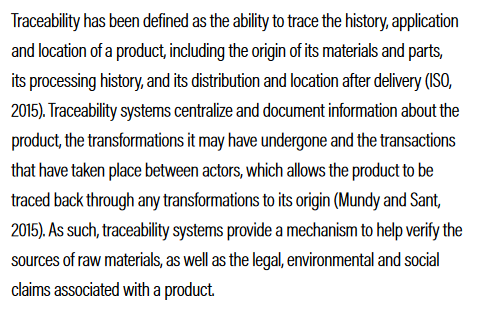
There are growing demands for countries to develop national timber traceability systems. These demands range from a country’s own needs to track timber and collect associated revenues consistently, to international demands for due diligence regarding the legality of the timber for imports, and in some cases where a country has entered into a Voluntary Partnership Agreement (VPA) with the EU. In response, many countries have made considerable efforts to develop national systems which track timber flow from producer through processing, to the point of sale, and there are different approaches and tools available for doing this. This report aims to document lessons and best practices in the planning of government-led timber traceability systems in Latin America to provide a reference for government officials in other countries who are tasked with developing and implementing similar systems. It also seeks to help other audiences recognize that traceability is global trend and is becoming a new norm for conducting business and trade in international wood markets.
https://www.fao.org/3/cb8909en/cb8909en.pdf
There are growing demands for countries to develop national timber traceability systems. These demands range from a country’s own needs to track timber and collect associated revenues consistently, to international demands for due diligence regarding the legality of the timber for imports, and in some cases where a country has entered into a Voluntary Partnership Agreement (VPA) with the EU. In response, many countries have made considerable efforts to develop national systems which track timber flow from producer through processing, to the point of sale, and there are different approaches and tools available for doing this. This report aims to document lessons and best practices in the planning of government-led timber traceability systems in Latin America to provide a reference for government officials in other countries who are tasked with developing and implementing similar systems. It also seeks to help other audiences recognize that traceability is global trend and is becoming a new norm for conducting business and trade in international wood markets.
Company Website, e2open
https://www.e2open.com/
With the e2open SaaS platform, you can anticipate disruptions and predict opportunities to help your business improve efficiency, drive profitability, reduce waste, and operate sustainably.
https://www.e2open.com/
With the e2open SaaS platform, you can anticipate disruptions and predict opportunities to help your business improve efficiency, drive profitability, reduce waste, and operate sustainably.
Beware, your imagination leaves digital traces
http://www.bruno-latour.fr/sites/default/files/P-129-THES-GB.pdf
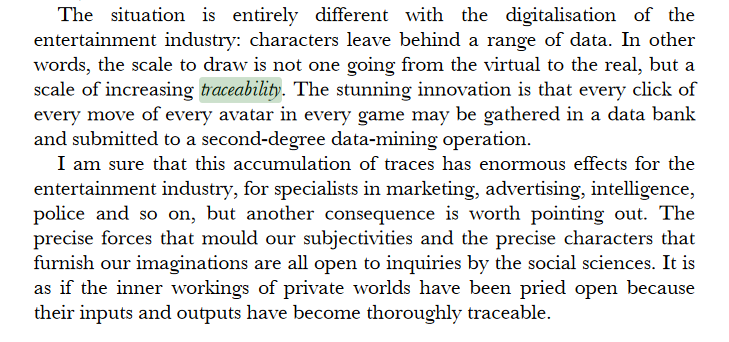
Traceability in Bruno Latour
http://www.bruno-latour.fr/sites/default/files/P-129-THES-GB.pdf
Traceability in Bruno Latour
Why tracing seafood from sea to plate is the next frontier in sustainability
https://www.worldwildlife.org/stories/why-tracing-seafood-from-sea-to-plate-is-the-next-frontier-in-sustainability
Traceability starts with attaching to each fish caught a set of information such as where and when the fish was caught, the name of the fishing boat, the license it carries, and the type of gear the fishers used. Detailed data are essential because tracing seafood from sea to plate is not a simple proposition. Global supply chains in this massive industry are complex; some fish might pass through a dozen different companies and several countries before reaching a dinner plate. Ensuring that traded fish have a detailed and connected data trail to their origin is the best way to inform assessments of a fishery’s impact on the environment and its labor practices. But there is no way to trace products through such complex journeys without a uniform standard for digital data collection and sharing. That’s why WWF spent years working with dozens of companies around the world to create the Global Dialogue on Seafood Traceability standards.
https://www.worldwildlife.org/stories/why-tracing-seafood-from-sea-to-plate-is-the-next-frontier-in-sustainability
Traceability starts with attaching to each fish caught a set of information such as where and when the fish was caught, the name of the fishing boat, the license it carries, and the type of gear the fishers used. Detailed data are essential because tracing seafood from sea to plate is not a simple proposition. Global supply chains in this massive industry are complex; some fish might pass through a dozen different companies and several countries before reaching a dinner plate. Ensuring that traded fish have a detailed and connected data trail to their origin is the best way to inform assessments of a fishery’s impact on the environment and its labor practices. But there is no way to trace products through such complex journeys without a uniform standard for digital data collection and sharing. That’s why WWF spent years working with dozens of companies around the world to create the Global Dialogue on Seafood Traceability standards.
Landscapes of Trade
https://mertennefs.eu/landscapes-of-trade/

Logistiek is een onlosmakelijk deel van ons dagelijks leven, en een cruciaal ingrediënt van de circulaire economie. Tegelijkertijd groeit de kritiek omtrent de ‘verdozing’ van het landschap door grote distributiecentra, vaak gerelateerd aan e-commerce. De ruimtelijke voetafdruk en gemiddelde grootte van een loods zijn sinds 1980 verviervoudigd. Hierdoor neemt congestie van wegen toe en gaat de kwaliteit van leven achteruit. Deze kaart is een vereenvoudigde weergave van de ruimtelijke dataset die onderzoeker Merten Nefs gebruikt in zijn promotieonderzoek Landscapes of trade - een samenwerking van TU Delft, Erasmus School of Economics en Vereniging Deltametropool. De kaart is bedoeld voor iedereen die inzicht wil krijgen in het ruimtelijk patroon van logistiek in Nederland, en in het bijzonder de goederenvervoer corridor Oost/Zuidoost, de meest intensieve van Nederland.
https://mertennefs.eu/landscapes-of-trade/
Logistiek is een onlosmakelijk deel van ons dagelijks leven, en een cruciaal ingrediënt van de circulaire economie. Tegelijkertijd groeit de kritiek omtrent de ‘verdozing’ van het landschap door grote distributiecentra, vaak gerelateerd aan e-commerce. De ruimtelijke voetafdruk en gemiddelde grootte van een loods zijn sinds 1980 verviervoudigd. Hierdoor neemt congestie van wegen toe en gaat de kwaliteit van leven achteruit. Deze kaart is een vereenvoudigde weergave van de ruimtelijke dataset die onderzoeker Merten Nefs gebruikt in zijn promotieonderzoek Landscapes of trade - een samenwerking van TU Delft, Erasmus School of Economics en Vereniging Deltametropool. De kaart is bedoeld voor iedereen die inzicht wil krijgen in het ruimtelijk patroon van logistiek in Nederland, en in het bijzonder de goederenvervoer corridor Oost/Zuidoost, de meest intensieve van Nederland.
Is There a Mega Warehouse Near You?
https://www.sierraclub.org/sierra/map-mega-warehouses-near-you

The explosion of online shopping has led to a frenzy of warehouse construction in almost every region of the United States. To accommodate the flow of merchandise, Amazon and other online retailers have built what they call “fulfillment centers” in key hubs where zoning is welcoming (or nonexistent) and land is cheap. Today in the United States, there are 39,116 warehouses and distribution centers larger than 100,000 square feet, and they can be found in rural and suburban areas as well as urban ones. For nearby residents, the arrival of the mega warehouses means that traffic noise and air pollution bombard them at all times of the day, all year. But not everyone is impacted equally by the explosion of e-commerce. Often, the consequences fall hardest on communities of color. Use this map to view the distribution of mega-warehouses in your city or state.
https://www.sierraclub.org/sierra/map-mega-warehouses-near-you
The explosion of online shopping has led to a frenzy of warehouse construction in almost every region of the United States. To accommodate the flow of merchandise, Amazon and other online retailers have built what they call “fulfillment centers” in key hubs where zoning is welcoming (or nonexistent) and land is cheap. Today in the United States, there are 39,116 warehouses and distribution centers larger than 100,000 square feet, and they can be found in rural and suburban areas as well as urban ones. For nearby residents, the arrival of the mega warehouses means that traffic noise and air pollution bombard them at all times of the day, all year. But not everyone is impacted equally by the explosion of e-commerce. Often, the consequences fall hardest on communities of color. Use this map to view the distribution of mega-warehouses in your city or state.
Report, Food Barons 2022
https://www.etcgroup.org/sites/www.etcgroup.org/files/files/food-barons-2022-full_sectors-final_16_sept.pdf
It’s time to divest from the Industrial Food Chain. Institutions under pressure from civil soci- ety have already succeeded in partly directing funds away from tobacco, arms and fossil fuels on moral grounds. Grassroots climate movements have successfully named fossil fuel compa- nies as the obstruction to meaningful climate action. Food movements should follow suit: it is a logical next step to demand the elimination of all financial support to the Industrial Food Chain, exposing its high degree of transnational corporate control and its multiple abuses.
https://www.etcgroup.org/sites/www.etcgroup.org/files/files/food-barons-2022-full_sectors-final_16_sept.pdf
It’s time to divest from the Industrial Food Chain. Institutions under pressure from civil soci- ety have already succeeded in partly directing funds away from tobacco, arms and fossil fuels on moral grounds. Grassroots climate movements have successfully named fossil fuel compa- nies as the obstruction to meaningful climate action. Food movements should follow suit: it is a logical next step to demand the elimination of all financial support to the Industrial Food Chain, exposing its high degree of transnational corporate control and its multiple abuses.
Article, ‘This land belonged to us’: Nestlé supply chain linked to disputed Indigenous territory
https://www.theguardian.com/environment/2022/sep/22/this-land-belonged-to-us-nestle-supply-chain-linked-to-disputed-indigenous-territory
Marfrig is one of Brazil’s biggest meat producers, with 32,000 workers and revenues in 2021 of about $15bn (£13.3bn). It slaughters as many as 5 million cattle per year in South America. Shipping records show the Tangará da Serra abattoir has exported more than £1bn of beef products since 2014 to various buyers. Destinations include China, Germany, Spain, Italy, the Netherlands and the UK. Details about Marfrig’s suppliers are kept under wraps, but our investigation has obtained information on some of the hundreds of properties in the Amazon and Cerrado from which it buys for its Tangará da Serra plant. Cross-referencing the imagery with public records identified two properties overlapping the territory claimed by the Myky, one of which – Cascavel farm – directly transported cattle to Marfrig in 2019, according to documents obtained by TBIJ. The farm did not respond to the bureau’s requests for comment. Marfrig told TBIJ that it only considers Indigenous lands to be those that have received presidential approval. Since Bolsonaro came to power in 2019, he has not approved any.
https://www.theguardian.com/environment/2022/sep/22/this-land-belonged-to-us-nestle-supply-chain-linked-to-disputed-indigenous-territory
Marfrig is one of Brazil’s biggest meat producers, with 32,000 workers and revenues in 2021 of about $15bn (£13.3bn). It slaughters as many as 5 million cattle per year in South America. Shipping records show the Tangará da Serra abattoir has exported more than £1bn of beef products since 2014 to various buyers. Destinations include China, Germany, Spain, Italy, the Netherlands and the UK. Details about Marfrig’s suppliers are kept under wraps, but our investigation has obtained information on some of the hundreds of properties in the Amazon and Cerrado from which it buys for its Tangará da Serra plant. Cross-referencing the imagery with public records identified two properties overlapping the territory claimed by the Myky, one of which – Cascavel farm – directly transported cattle to Marfrig in 2019, according to documents obtained by TBIJ. The farm did not respond to the bureau’s requests for comment. Marfrig told TBIJ that it only considers Indigenous lands to be those that have received presidential approval. Since Bolsonaro came to power in 2019, he has not approved any.
Article, Small number of huge companies dominate global food chain, study finds
https://www.theguardian.com/business/2022/sep/22/small-number-of-huge-companies-dominate-global-food-chain-study-finds
The dominance of a small number of big companies over the global food chain is increasing, aided by the rising use of “big data” and artificial intelligence, new research has found. Only two companies control 40% of the global commercial seed market, compared with 10 companies controlling the same proportion of the market 25 years ago, according to the ETC Group, an eco-justice organisation.
https://www.theguardian.com/business/2022/sep/22/small-number-of-huge-companies-dominate-global-food-chain-study-finds
The dominance of a small number of big companies over the global food chain is increasing, aided by the rising use of “big data” and artificial intelligence, new research has found. Only two companies control 40% of the global commercial seed market, compared with 10 companies controlling the same proportion of the market 25 years ago, according to the ETC Group, an eco-justice organisation.
Hypertrack, Company Website
https://hypertrack.com/
Pre-dispatch and post-dispatch APIs for logistics tech builders
https://hypertrack.com/
Pre-dispatch and post-dispatch APIs for logistics tech builders
Article, Why the future of global trade is digital
https://ship.nridigital.com/ship_sep22/future_trade_global_shipping_data
Data sits at the heart of global trade. How it is generated, held, used, and exchanged has an enormous impact on the productivity and sustainability of container shipping processes, the experience of shipping customers, and the industry’s ability to innovate and improve. Digitalising data and enabling its seamless exchange between all stakeholders is key to mitigating the impacts of current and future supply chain disruption and ensuring a future in which shipping customers have a choice of seamless, easy-to-use services that provide the flexibility to meet their business and sustainability goals.
https://ship.nridigital.com/ship_sep22/future_trade_global_shipping_data
Data sits at the heart of global trade. How it is generated, held, used, and exchanged has an enormous impact on the productivity and sustainability of container shipping processes, the experience of shipping customers, and the industry’s ability to innovate and improve. Digitalising data and enabling its seamless exchange between all stakeholders is key to mitigating the impacts of current and future supply chain disruption and ensuring a future in which shipping customers have a choice of seamless, easy-to-use services that provide the flexibility to meet their business and sustainability goals.
The Container Port PERFORMANCE INDEX 2021
https://thedocs.worldbank.org/en/doc/66e3aa5c3be4647addd01845ce353992-0190062022/original/Container-Port-Performance-Index-2021.pdf
Maritime transport is the backbone of globalized trade and the manufacturing supply chain. The mari- time sector offers the most economical, energy efficient, and reliable mode of transportation over long distances. More than four-fifths of global merchandise trade (by volume) is carried by sea. A significant and growing portion of that volume, accounting for approximately 35 percent of total volumes and more than 60 percent of commercial value, is carried in containers. The growth of containerization has led to vast changes in the where and the how goods are manufactured and processed, a process that continues to evolve. Container ports, accordingly, are critical nodes in global supply chains and central to the growth strategies of many emerging economies. In many cases, the development of high-qual- ity container port infrastructure, operated efficiently, has been a prerequisite to successful export-led growth strategies. It can facilitate investment in production and distribution systems, supporting the expansion of manufacturing and logistics, creating employment, and raising income levels.
https://thedocs.worldbank.org/en/doc/66e3aa5c3be4647addd01845ce353992-0190062022/original/Container-Port-Performance-Index-2021.pdf
Maritime transport is the backbone of globalized trade and the manufacturing supply chain. The mari- time sector offers the most economical, energy efficient, and reliable mode of transportation over long distances. More than four-fifths of global merchandise trade (by volume) is carried by sea. A significant and growing portion of that volume, accounting for approximately 35 percent of total volumes and more than 60 percent of commercial value, is carried in containers. The growth of containerization has led to vast changes in the where and the how goods are manufactured and processed, a process that continues to evolve. Container ports, accordingly, are critical nodes in global supply chains and central to the growth strategies of many emerging economies. In many cases, the development of high-qual- ity container port infrastructure, operated efficiently, has been a prerequisite to successful export-led growth strategies. It can facilitate investment in production and distribution systems, supporting the expansion of manufacturing and logistics, creating employment, and raising income levels.
Guarantee of origin (GoO)
https://en.wikipedia.org/wiki/Guarantee_of_origin
A Guarantee of Origin (GO or GoO) is an energy certificate defined in article 15 of the European Directive 2009/28/EC. A GO labels electricity from renewable sources to provide information to electricity customers on the source of their energy. Guarantees of origin are the only precisely defined instruments evidencing the origin of electricity generated from renewable energy sources. In operation, a GO is a green label or tracker that guarantees that one MWh of electricity has been produced from renewable energy sources. Guarantees of origin are traded. When a company buys guarantees of origin, as documentation for the electricity delivered or consumed, the guarantees of origin are cancelled in the electronic certificate registry.
https://en.wikipedia.org/wiki/Guarantee_of_origin
A Guarantee of Origin (GO or GoO) is an energy certificate defined in article 15 of the European Directive 2009/28/EC. A GO labels electricity from renewable sources to provide information to electricity customers on the source of their energy. Guarantees of origin are the only precisely defined instruments evidencing the origin of electricity generated from renewable energy sources. In operation, a GO is a green label or tracker that guarantees that one MWh of electricity has been produced from renewable energy sources. Guarantees of origin are traded. When a company buys guarantees of origin, as documentation for the electricity delivered or consumed, the guarantees of origin are cancelled in the electronic certificate registry.
ACM Leidraad Duurzaamheidsclaims
https://www.acm.nl/sites/default/files/documents/leidraad-duurzaamheidsclaims.pdf
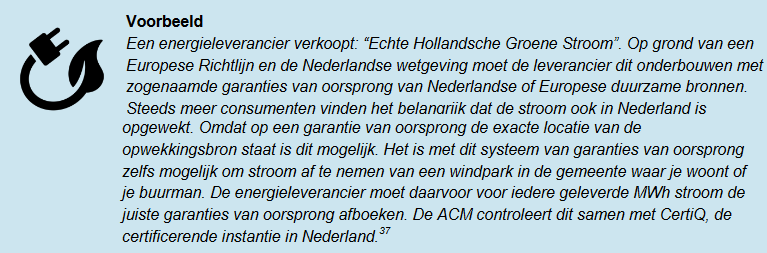
De Autoriteit Consument en Markt (hierna ook: de ACM) is een onafhankelijke toezichthouder. De missie van de ACM is om markten goed te laten werken voor mensen en bedrijven, nu en in de toekomst. Dit doet de ACM onder meer door toezicht te houden op de naleving van de wetten en regels waaraan bedrijven zich moeten houden in hun omgang met consumenten. De ACM draagt bij aan voldoende informatie en vertrouwen zodat consumenten een goede beslissing kunnen nemen over de aankoop van een product of dienst. Ook beschermt de ACM bedrijven tegen oneerlijke concurrentie van bedrijven die zich niet aan de regels houden. Met deze ’Leidraad duurzaamheidsclaims’ (hierna ook: de leidraad) legt de ACM aan bedrijven uit hoe zij de consumentenregels over oneerlijke handelspraktijken toepast op duurzaamheidsclaims.1 Met vuistregels, uitleg en praktische voorbeelden geeft de ACM handvatten aan bedrijven voor het formuleren en evalueren van duurzaamheidsclaims. De voorbeelden dienen als illustraties van duurzaamheidsclaims die mogelijk misleidend zijn. Of een claim daadwerkelijk misleidend is, is afhankelijk van de omstandigheden van het geval.
https://www.acm.nl/sites/default/files/documents/leidraad-duurzaamheidsclaims.pdf
De Autoriteit Consument en Markt (hierna ook: de ACM) is een onafhankelijke toezichthouder. De missie van de ACM is om markten goed te laten werken voor mensen en bedrijven, nu en in de toekomst. Dit doet de ACM onder meer door toezicht te houden op de naleving van de wetten en regels waaraan bedrijven zich moeten houden in hun omgang met consumenten. De ACM draagt bij aan voldoende informatie en vertrouwen zodat consumenten een goede beslissing kunnen nemen over de aankoop van een product of dienst. Ook beschermt de ACM bedrijven tegen oneerlijke concurrentie van bedrijven die zich niet aan de regels houden. Met deze ’Leidraad duurzaamheidsclaims’ (hierna ook: de leidraad) legt de ACM aan bedrijven uit hoe zij de consumentenregels over oneerlijke handelspraktijken toepast op duurzaamheidsclaims.1 Met vuistregels, uitleg en praktische voorbeelden geeft de ACM handvatten aan bedrijven voor het formuleren en evalueren van duurzaamheidsclaims. De voorbeelden dienen als illustraties van duurzaamheidsclaims die mogelijk misleidend zijn. Of een claim daadwerkelijk misleidend is, is afhankelijk van de omstandigheden van het geval.
EU Policy on Critical Raw Materials (CRM)
https://single-market-economy.ec.europa.eu/sectors/raw-materials/areas-specific-interest/critical-raw-materials_en
Raw materials are crucial to Europe’s economy. They form a strong industrial base, producing a broad range of goods and applications used in everyday life and modern technologies. Reliable and unhindered access to certain raw materials is a growing concern within the EU and across the globe. To address this challenge, the European Commission has created a list of critical raw materials (CRMs) for the EU, which is subject to a regular review and update. CRMs combine raw materials of high importance to the EU economy and of high risk associated with their supply.
https://single-market-economy.ec.europa.eu/sectors/raw-materials/areas-specific-interest/critical-raw-materials_en
Raw materials are crucial to Europe’s economy. They form a strong industrial base, producing a broad range of goods and applications used in everyday life and modern technologies. Reliable and unhindered access to certain raw materials is a growing concern within the EU and across the globe. To address this challenge, the European Commission has created a list of critical raw materials (CRMs) for the EU, which is subject to a regular review and update. CRMs combine raw materials of high importance to the EU economy and of high risk associated with their supply.
Open Food Facts
https://world.openfoodfacts.org/
Open Food Facts is a food products database made by everyone, for everyone. You can use it to make better food choices, and as it is open data, anyone can re-use it for any purpose.
https://world.openfoodfacts.org/
Open Food Facts is a food products database made by everyone, for everyone. You can use it to make better food choices, and as it is open data, anyone can re-use it for any purpose.
TraceAll Global, Company Website
https://www.traceallglobal.com/
We deliver state of the art cloud based technology that ensures real time auditable traceability of your product and an ability to see your assets in real time.
https://www.traceallglobal.com/
We deliver state of the art cloud based technology that ensures real time auditable traceability of your product and an ability to see your assets in real time.
UPC's Go Back, Way Back
https://www.upc-search.org/?q=9780140125795
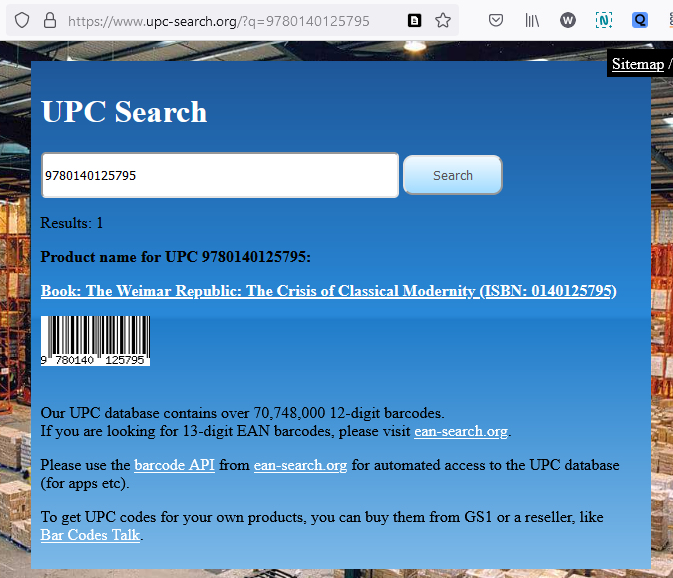
Not bad for a book first published by Penguin in 1991.
https://www.upc-search.org/?q=9780140125795
Not bad for a book first published by Penguin in 1991.
Article, Is the US chicken industry cheating its farmers?
https://www.theguardian.com/environment/2019/aug/03/is-the-us-chicken-industry-cheating-its-farmers
A report for poultry companies produced by a secretive data-sharing firm, reviewed in a joint investigation by the Guardian and the Food and Environment Reporting Network (Fern), shows sensitive market information including how much producers are being paid per chicken. US anti-trust officials are currently conducting a grand jury investigation into poultry companies in response to a major class-action lawsuit alleging that the firms use information supplied by Agri Stats, a data company, to keep farmers’ pay low and chicken prices high. Agri Stats produces daily reports for the poultry industry on chicken production, and has enabled companies to share detailed financial information with one another for decades.
https://www.theguardian.com/environment/2019/aug/03/is-the-us-chicken-industry-cheating-its-farmers
A report for poultry companies produced by a secretive data-sharing firm, reviewed in a joint investigation by the Guardian and the Food and Environment Reporting Network (Fern), shows sensitive market information including how much producers are being paid per chicken. US anti-trust officials are currently conducting a grand jury investigation into poultry companies in response to a major class-action lawsuit alleging that the firms use information supplied by Agri Stats, a data company, to keep farmers’ pay low and chicken prices high. Agri Stats produces daily reports for the poultry industry on chicken production, and has enabled companies to share detailed financial information with one another for decades.
Article, De datagrariër
https://www.platform-investico.nl/artikel/de-datagrarier/
Investico onderzocht in samenwerking met Trouw de landbouwsector en ontdekte hoe de datagedreven landbouw een machtsverschuiving in de sector teweeg brengt. Via de data van hun slimme landbouwapparatuur raken boeren afhankelijker van een aantal grote spelers in het veld. Dat levert soms grote financiële schade op en kan, zoals bij incidenten met melkrobots, zelfs dieren het leven kosten. Privacywetten bieden de boeren weinig bescherming omdat hun data geen mensen betreffen, maar dieren of machines. Ook prijsmanipulaties en hogere prijzen in de supermarkten liggen op de loer. Want wie precies toegang heeft tot waardevolle agrarische gegevens, is voor boeren en landbouworganisaties onduidelijk. De meeste landbouwers hebben geen idee aan wie ze daarvoor toestemming hebben gegeven, blijkt uit een enquête van Investico samen met de Zuidelijke Land- en Tuinbouworganisatie ZLTO.
https://www.platform-investico.nl/artikel/de-datagrarier/
Investico onderzocht in samenwerking met Trouw de landbouwsector en ontdekte hoe de datagedreven landbouw een machtsverschuiving in de sector teweeg brengt. Via de data van hun slimme landbouwapparatuur raken boeren afhankelijker van een aantal grote spelers in het veld. Dat levert soms grote financiële schade op en kan, zoals bij incidenten met melkrobots, zelfs dieren het leven kosten. Privacywetten bieden de boeren weinig bescherming omdat hun data geen mensen betreffen, maar dieren of machines. Ook prijsmanipulaties en hogere prijzen in de supermarkten liggen op de loer. Want wie precies toegang heeft tot waardevolle agrarische gegevens, is voor boeren en landbouworganisaties onduidelijk. De meeste landbouwers hebben geen idee aan wie ze daarvoor toestemming hebben gegeven, blijkt uit een enquête van Investico samen met de Zuidelijke Land- en Tuinbouworganisatie ZLTO.
Article, Decentralized Exploitation
https://hackernoon.com/the-rise-of-digital-neo-colonialism-rc1h3xdr
"The goal was to inform the consumer about the origin of their goods, and we believed that once informed, they would make better choices. Like most blockchain supply chain startups, we believed we could create a more fair environment for the farmers, that consumers would tip through blockchain, that things would get better for everyone.
A single coffee bean is almost worthless alone, it is only in bags of thousands of other beans that they have any value. Likewise, the data about a single coffee bean is worth so little that a farmer is incapable of extracting any value from it. Even cooperatives that represent scores of farmers are limited in their ability to extract value from the data of a single bean.
Of course, if you can build a supply chain pipeline that can capture the data about every bean, suddenly everything is different. With enough data you can create a comprehensive picture of the heath of harvests, the effect of fertilizers and farming methods, you can understand rainfall, climate change, and yields. You can look into the past and predict the future, correlate growing conditions, identify and eliminate inefficiencies and standardize quality. Most importantly, however, you can create an entirely new resource: data, and the more of it you collect, the more valuable it becomes."
https://hackernoon.com/the-rise-of-digital-neo-colonialism-rc1h3xdr
"The goal was to inform the consumer about the origin of their goods, and we believed that once informed, they would make better choices. Like most blockchain supply chain startups, we believed we could create a more fair environment for the farmers, that consumers would tip through blockchain, that things would get better for everyone.
A single coffee bean is almost worthless alone, it is only in bags of thousands of other beans that they have any value. Likewise, the data about a single coffee bean is worth so little that a farmer is incapable of extracting any value from it. Even cooperatives that represent scores of farmers are limited in their ability to extract value from the data of a single bean.
Of course, if you can build a supply chain pipeline that can capture the data about every bean, suddenly everything is different. With enough data you can create a comprehensive picture of the heath of harvests, the effect of fertilizers and farming methods, you can understand rainfall, climate change, and yields. You can look into the past and predict the future, correlate growing conditions, identify and eliminate inefficiencies and standardize quality. Most importantly, however, you can create an entirely new resource: data, and the more of it you collect, the more valuable it becomes."
The Programme for the Endorsement of Forest Certification (PEFC)
https://pefc.org/
As an umbrella organization, we endorse national forest certification systems that have been developed through multi-stakeholder processes and tailored to local priorities and conditions.
https://pefc.org/
As an umbrella organization, we endorse national forest certification systems that have been developed through multi-stakeholder processes and tailored to local priorities and conditions.
Website, Hamish van der Ven
https://hamishvanderven.com/research/
My research examines the role of businesses, NGOs, and standard setters in solving transboundary environmental challenges. This research program is inherently interdisciplinary and seeks to put elements of political science, environmental studies and business/management in conversation. In the absence of comprehensive state-led solutions, a host of innovative transnational governance initiatives have emerged that use market forces to address environmental problems. The rise of these new forms of governance raises a number of questions. Under what conditions are they likely to be effective? How do they interact with the traditional authority of governments and international organizations? And what negative externalities do the create? I address these questions across a number of related projects, reviewed below.
https://hamishvanderven.com/research/
My research examines the role of businesses, NGOs, and standard setters in solving transboundary environmental challenges. This research program is inherently interdisciplinary and seeks to put elements of political science, environmental studies and business/management in conversation. In the absence of comprehensive state-led solutions, a host of innovative transnational governance initiatives have emerged that use market forces to address environmental problems. The rise of these new forms of governance raises a number of questions. Under what conditions are they likely to be effective? How do they interact with the traditional authority of governments and international organizations? And what negative externalities do the create? I address these questions across a number of related projects, reviewed below.
Article: We Were Warned About the Ports
https://prospect.org/economy/we-were-warned-about-the-ports/
As the American economy became increasingly reliant on goods made in East Asia, so too did it rely on the only port that could readily receive them, L.A./Long Beach, which strained against its own limitations. The expansive nearby population of Southern California, once seen as an asset to finding cheap and ample labor to unload containers and drive trucks and staff warehouses, soon became a hindrance to expansion, as land around the ports was ringed with housing, making growth impossible. Instead, the ports began expanding out into the sea, with major terraforming initiatives to conjure more dock space from the ocean floor, a process that still couldn’t keep up with the strains of a growing e-commerce sector that relied overwhelmingly on Chinese manufacturing. (This led to a separate problem during the supply crunch: where to put the empty containers. Often they were dumped in residential neighborhoods, towering above modest homes and subdivisions.)
https://prospect.org/economy/we-were-warned-about-the-ports/
As the American economy became increasingly reliant on goods made in East Asia, so too did it rely on the only port that could readily receive them, L.A./Long Beach, which strained against its own limitations. The expansive nearby population of Southern California, once seen as an asset to finding cheap and ample labor to unload containers and drive trucks and staff warehouses, soon became a hindrance to expansion, as land around the ports was ringed with housing, making growth impossible. Instead, the ports began expanding out into the sea, with major terraforming initiatives to conjure more dock space from the ocean floor, a process that still couldn’t keep up with the strains of a growing e-commerce sector that relied overwhelmingly on Chinese manufacturing. (This led to a separate problem during the supply crunch: where to put the empty containers. Often they were dumped in residential neighborhoods, towering above modest homes and subdivisions.)
ThisFish, Company Website
https://this.fish/
ThisFish Inc. is an emerging leader in seafood traceability software, increasing trust and transparency in the supply chain. We enable you to make informed choices rewarding those who responsibly harvest.
https://this.fish/
ThisFish Inc. is an emerging leader in seafood traceability software, increasing trust and transparency in the supply chain. We enable you to make informed choices rewarding those who responsibly harvest.
Article: A US Freight Rail Crisis Threatens More Supply Chain Chaos
https://www.wired.com/story/a-us-freight-rail-crisis-threatens-more-supply-chain-chaos/
Early this summer, farmers worried that millions of chickens in California’s Central Valley might soon peck each other to death. The birds were running perilously low on feed, which should have been delivered by Union Pacific Railroad from Midwestern corn producers. Foster Farms needed at least nine trainloads of corn each month to feed its tens of millions of chickens and turkeys, plus tens of thousands of dairy cows at its California facilities. But the trains weren’t showing up. Chickens can’t go long without eating—they become aggressive and turn to cannibalism—and if the feed didn’t arrive soon, the mega-flock would have to be euthanized.
https://www.wired.com/story/a-us-freight-rail-crisis-threatens-more-supply-chain-chaos/
Early this summer, farmers worried that millions of chickens in California’s Central Valley might soon peck each other to death. The birds were running perilously low on feed, which should have been delivered by Union Pacific Railroad from Midwestern corn producers. Foster Farms needed at least nine trainloads of corn each month to feed its tens of millions of chickens and turkeys, plus tens of thousands of dairy cows at its California facilities. But the trains weren’t showing up. Chickens can’t go long without eating—they become aggressive and turn to cannibalism—and if the feed didn’t arrive soon, the mega-flock would have to be euthanized.
Source Intelligence, Company Website
https://www.sourceintelligence.com/
Streamline the evolving complexities of Responsible Sourcing due diligence, Restricted Substances compliance, and Product Lifecycle Management.
https://www.sourceintelligence.com/
Streamline the evolving complexities of Responsible Sourcing due diligence, Restricted Substances compliance, and Product Lifecycle Management.
Web crawler finds Greece hiding their involvement in Russion crude shipping
https://twitter.com/RobinBrooksIIF/status/1564261393326641152
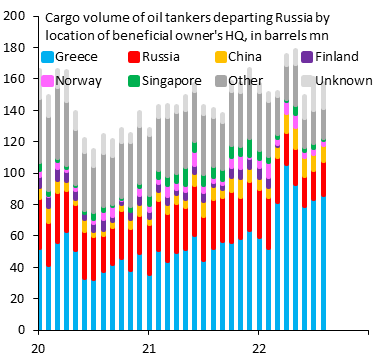
"Russia is exporting more crude than ever. Oil tankers are flagged all over the place to conceal ownership. We built a web crawler that goes from shell company to shell company to find the owner. Russia exports so much oil thanks to Greek-owned oil tankers." No link, documents, downloads or further info provided.
https://twitter.com/RobinBrooksIIF/status/1564261393326641152
"Russia is exporting more crude than ever. Oil tankers are flagged all over the place to conceal ownership. We built a web crawler that goes from shell company to shell company to find the owner. Russia exports so much oil thanks to Greek-owned oil tankers." No link, documents, downloads or further info provided.
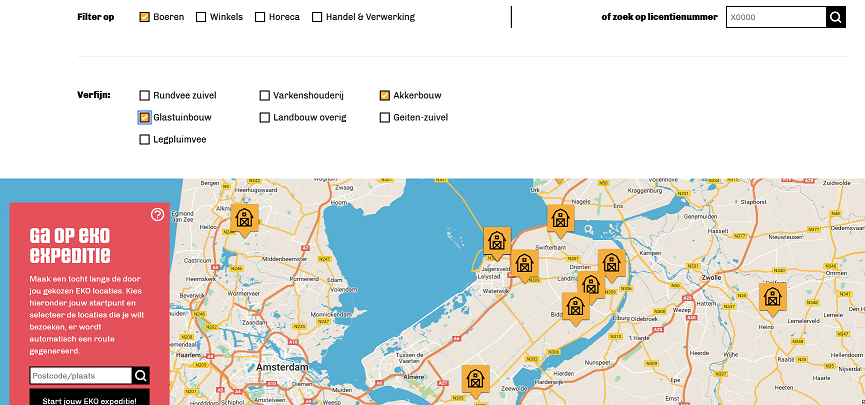
Book: The Travels of a T-Shirt in the Global Economy: An Economist Examines the Markets, Power, and
https://www.wiley.com/en-us/The+Travels+of+a+T+Shirt+in+the+Global+Economy%3A+An+Economist+Examines+the+Markets%2C+Power%2C+and+Politics+of+World+Trade+New+Preface+and+Epilogue+with+Updates+on+Economic+Issues+and+Main+Characters%2C+2nd+Edition-p-97
By title ‘The Travels of a T-Shirt in the Global Economy’, (Pietra Rivoli, 2005) sound like a potential lost classic of traceability. Unfortunately, it is not. A t-shirt is bought in Florida, screen-printed in Florida from a shirt made from Texan cotton in Shanghai. That is the coat hanger for the narrative, but of little substance to the overall book. The debates on the pros and cons of globalism are still here but have changed so much that the context for this book seems Jurassic. What we do get is a particular argument on how nations develop economically and that the bottom of the race to the bottom is progressively less deep. Long before food and energy textile supply chains achieved global reach and the results on working conditions have always been brutal. Rivoli foresaw that the apparel industry would eventually leave China. The Rana Plaza tragedy however shows how the deep the bottom can still be. There are interesting chapters on the ways the US textile sector managed to escape free market conditions and it ends with an overview of the 2nd life of donated clothing in Africa. It seems 2005 is long time ago.
https://www.wiley.com/en-us/The+Travels+of+a+T+Shirt+in+the+Global+Economy%3A+An+Economist+Examines+the+Markets%2C+Power%2C+and+Politics+of+World+Trade+New+Preface+and+Epilogue+with+Updates+on+Economic+Issues+and+Main+Characters%2C+2nd+Edition-p-97
By title ‘The Travels of a T-Shirt in the Global Economy’, (Pietra Rivoli, 2005) sound like a potential lost classic of traceability. Unfortunately, it is not. A t-shirt is bought in Florida, screen-printed in Florida from a shirt made from Texan cotton in Shanghai. That is the coat hanger for the narrative, but of little substance to the overall book. The debates on the pros and cons of globalism are still here but have changed so much that the context for this book seems Jurassic. What we do get is a particular argument on how nations develop economically and that the bottom of the race to the bottom is progressively less deep. Long before food and energy textile supply chains achieved global reach and the results on working conditions have always been brutal. Rivoli foresaw that the apparel industry would eventually leave China. The Rana Plaza tragedy however shows how the deep the bottom can still be. There are interesting chapters on the ways the US textile sector managed to escape free market conditions and it ends with an overview of the 2nd life of donated clothing in Africa. It seems 2005 is long time ago.
Tracking HLBU1175008
https://www.hapag-lloyd.com/en/online-business/track/track-by-container-solution.html?container=HLBU1175008
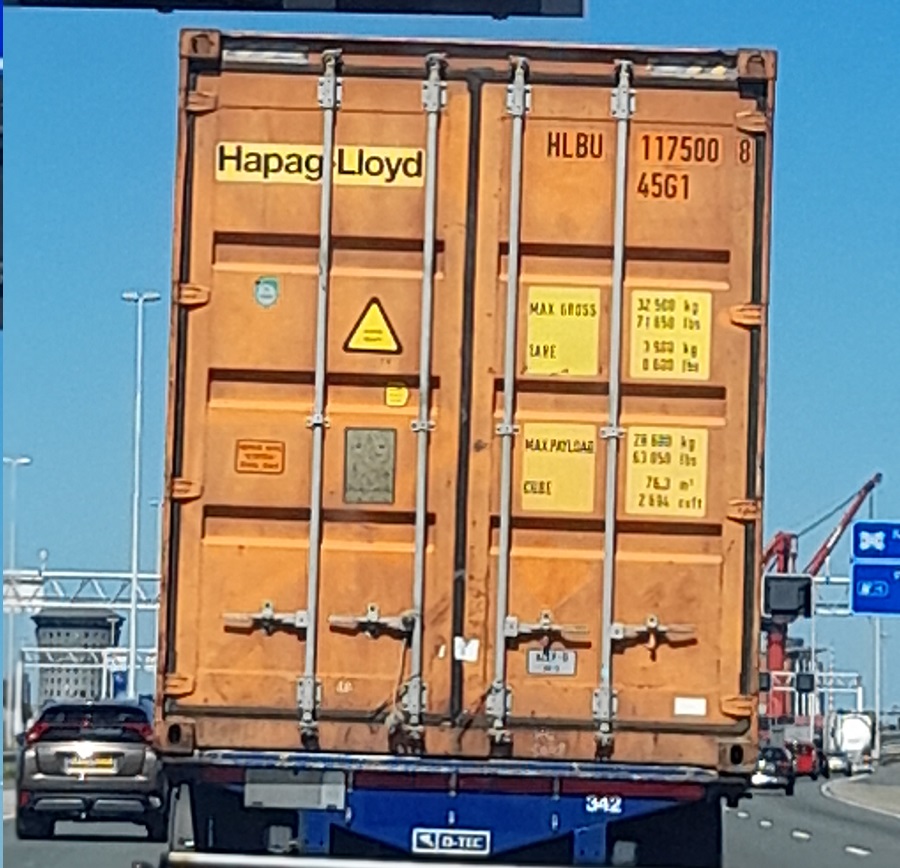
On the 10th of August 2022 my ride intersected paths with this truck and container near the Rotterdam Harbor. Anybody can take the unique container ID and look up the itinerary for this container by going to Hapag-Lloyd's website.
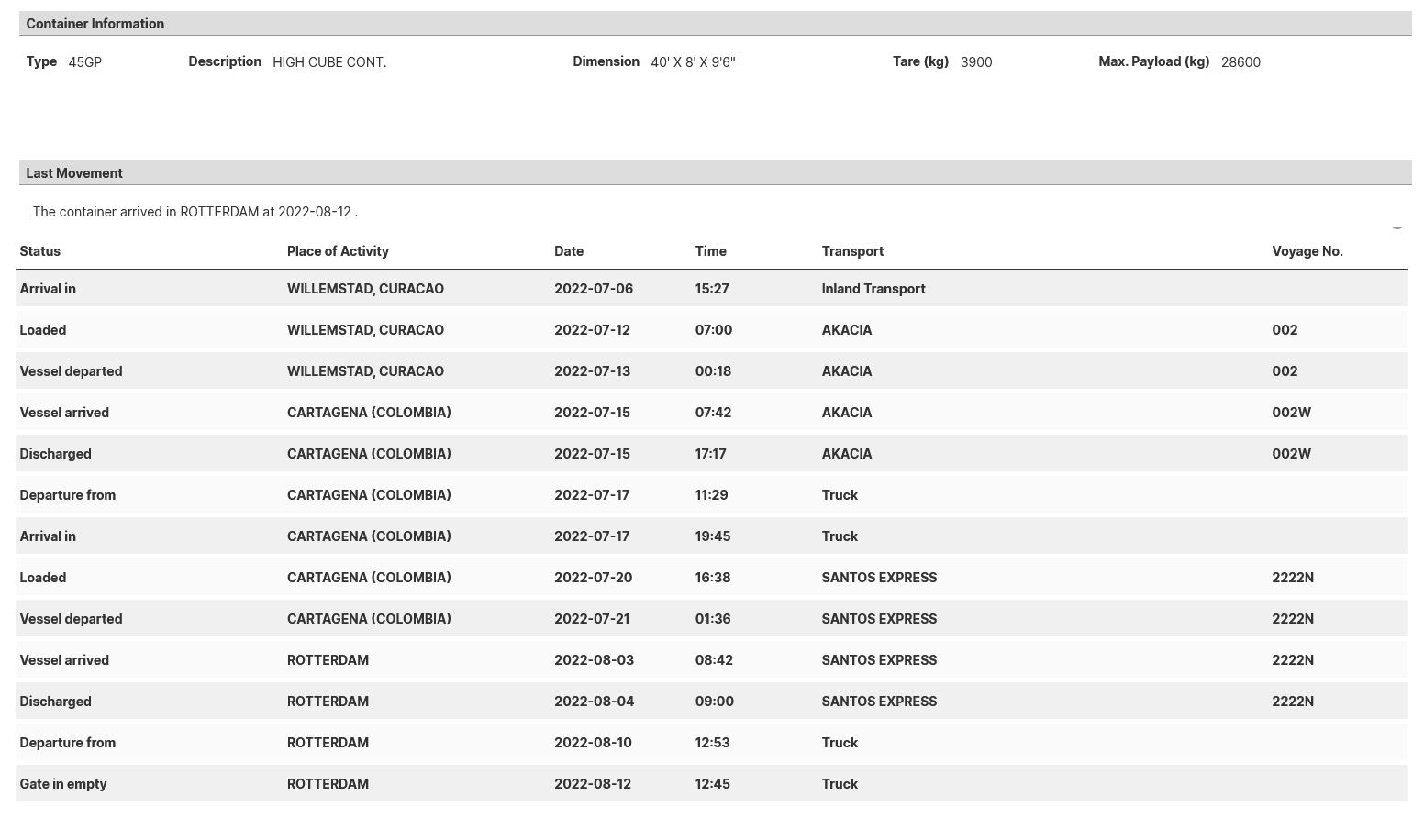
https://www.hapag-lloyd.com/en/online-business/track/track-by-container-solution.html?container=HLBU1175008
On the 10th of August 2022 my ride intersected paths with this truck and container near the Rotterdam Harbor. Anybody can take the unique container ID and look up the itinerary for this container by going to Hapag-Lloyd's website.
FishWise, Company Website
https://fishwise.org/
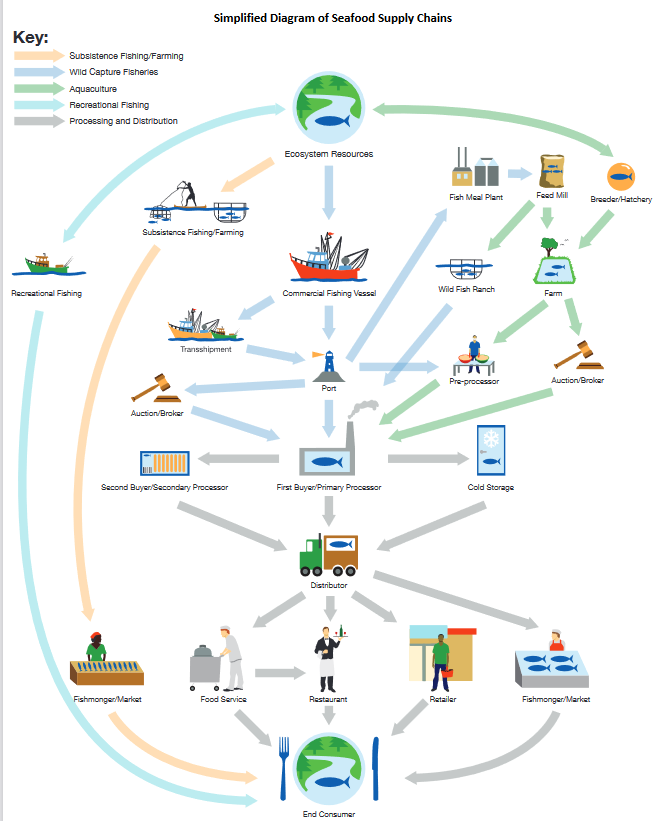
Fisheries and aquaculture provide a vital source of nutrition and livelihoods for billions of people worldwide, but the complexity of seafood supply chains allow for major environmental and social challenges. Seafood stakeholders need clear information and practical guidance to take action to address these problems. FishWise is a seafood industry compass, providing innovative market-based tools and expertise in sustainability services, human rights action, and traceability best practices.
https://fishwise.org/
Fisheries and aquaculture provide a vital source of nutrition and livelihoods for billions of people worldwide, but the complexity of seafood supply chains allow for major environmental and social challenges. Seafood stakeholders need clear information and practical guidance to take action to address these problems. FishWise is a seafood industry compass, providing innovative market-based tools and expertise in sustainability services, human rights action, and traceability best practices.
Six Million TEU Container Surplus Now Exists
https://splash247.com/6m-teu-of-surplus-containers-now-exist/
The global pool of shipping containers increased by 13% to almost 50m teu in 2021, which was three times prior growth trend.
Drewry estimates that each container averaged 18.1 lifts in 2021 compared with 19.2 in 2020 and between 19.5 and 20.6 in the 2010s.
6m Teu of surplus containers now exist in the global equipment pool.
https://splash247.com/6m-teu-of-surplus-containers-now-exist/
The global pool of shipping containers increased by 13% to almost 50m teu in 2021, which was three times prior growth trend.
Drewry estimates that each container averaged 18.1 lifts in 2021 compared with 19.2 in 2020 and between 19.5 and 20.6 in the 2010s.
6m Teu of surplus containers now exist in the global equipment pool.
DIRECTIVE OF THE EUROPEAN PARLIAMENT AND OF THE COUNCIL on Corporate Sustainability Due Diligence
https://eur-lex.europa.eu/legal-content/EN/TXT/HTML/?uri=CELEX:52022PC0071&from=EN
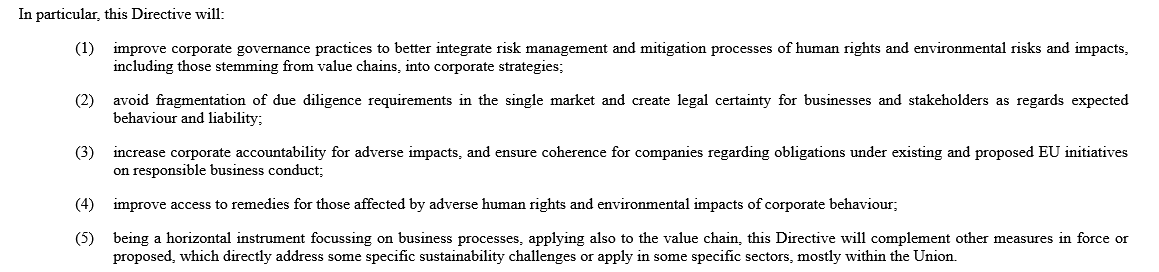
The behaviour of companies across all sectors of the economy is key to succeed in the Union’s transition to a climate-neutral and green economy in line with the European Green Deal and in delivering on the UN Sustainable Development Goals, including on its human rights- and environment-related objectives. This requires implementing comprehensive mitigation processes for adverse human rights and environmental impacts in their value chains, integrating sustainability into corporate governance and management systems, and framing business decisions in terms of human rights, climate and environmental impact, as well as in terms of the company’s resilience in the longer term.
EU companies operate in complex surroundings and, especially large ones, rely on global value chains. Given the significant number of their suppliers in the Union and in third countries and the overall complexity of value chains, EU companies, including the large ones, may encounter difficulties to identify and mitigate risks in their value chains linked to respect of human rights or environmental impacts. Identifying these adverse impacts in value chains will become easier if more companies exercise due diligence and thus more data is available on human rights and environmental adverse impacts.
https://eur-lex.europa.eu/legal-content/EN/TXT/HTML/?uri=CELEX:52022PC0071&from=EN
The behaviour of companies across all sectors of the economy is key to succeed in the Union’s transition to a climate-neutral and green economy in line with the European Green Deal and in delivering on the UN Sustainable Development Goals, including on its human rights- and environment-related objectives. This requires implementing comprehensive mitigation processes for adverse human rights and environmental impacts in their value chains, integrating sustainability into corporate governance and management systems, and framing business decisions in terms of human rights, climate and environmental impact, as well as in terms of the company’s resilience in the longer term.
EU companies operate in complex surroundings and, especially large ones, rely on global value chains. Given the significant number of their suppliers in the Union and in third countries and the overall complexity of value chains, EU companies, including the large ones, may encounter difficulties to identify and mitigate risks in their value chains linked to respect of human rights or environmental impacts. Identifying these adverse impacts in value chains will become easier if more companies exercise due diligence and thus more data is available on human rights and environmental adverse impacts.
Paper: Consumer Trust in Social Responsibility Communications: The Role of Supply Chain Visibility
https://deliverypdf.ssrn.com/delivery.php?ID=93602407200008800112210310508706701100504501002909101709901009212709700612601000700704504804005402604600008008701506702912101603001709208301610712606508101010306409102107302412709300409110910912307801309
Consumers are becoming more knowledgeable about companies’ social responsibility (SR) practices. As a result, they are increasingly skeptical when companies do not provide clear information about these practices. One way to overcome this skepticism is to strengthen consumer trust through improved supply chain trans- parency. To create transparency requires a company to both gain visibility into its supply chain and disclose information to consumers. However, the current SR literature has only focused on the effect of disclosure on consumer trust, while the effect of visibility on trust in SR communications is not well understood.
https://deliverypdf.ssrn.com/delivery.php?ID=93602407200008800112210310508706701100504501002909101709901009212709700612601000700704504804005402604600008008701506702912101603001709208301610712606508101010306409102107302412709300409110910912307801309
Consumers are becoming more knowledgeable about companies’ social responsibility (SR) practices. As a result, they are increasingly skeptical when companies do not provide clear information about these practices. One way to overcome this skepticism is to strengthen consumer trust through improved supply chain trans- parency. To create transparency requires a company to both gain visibility into its supply chain and disclose information to consumers. However, the current SR literature has only focused on the effect of disclosure on consumer trust, while the effect of visibility on trust in SR communications is not well understood.
GS1 Digital Link Standard: URI Syntax
https://www.gs1.org/docs/Digital-Link/GS1_Digital_Link_Standard_URI_Syntax_r_i1-2-1_2022-02-08.pdf
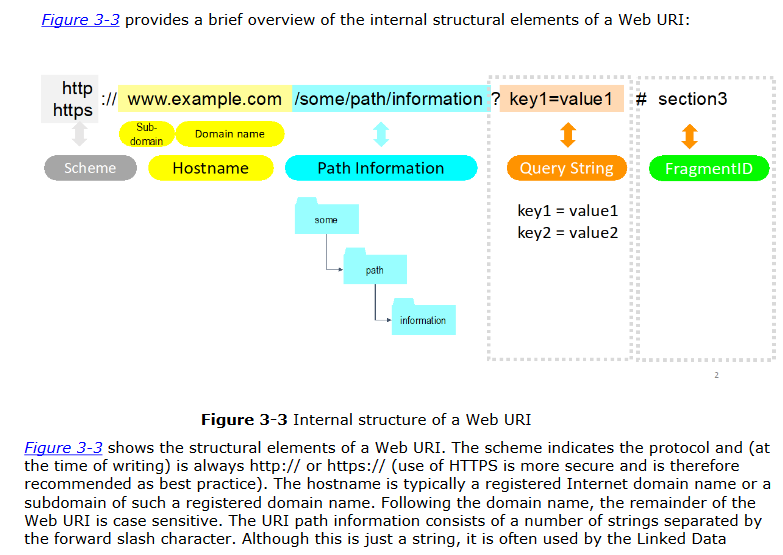
This document provides some of the background to the design of GS1 Digital Link, highlighting existing techniques and practices that underpin the World Wide Web, and applying those to the GS1 system. The normative portions set out the detailed syntax of Web addresses (HTTP URIs) that encode GS1 identifiers with exactly the same precision and expressivity as the AI-based element syntax used across the GS1 system, notably in the GS1 General Specifications. The GS1 Digital Link URI syntax distinguishes between primary keys, such as GTIN and GLN, key qualifiers, such as batch/lot and GLN extension, and attributes such as expiry date and ship-to address. The GS1 Digital Link URI syntax is the foundation on which all other aspects of the standard are built.
https://www.gs1.org/docs/Digital-Link/GS1_Digital_Link_Standard_URI_Syntax_r_i1-2-1_2022-02-08.pdf
This document provides some of the background to the design of GS1 Digital Link, highlighting existing techniques and practices that underpin the World Wide Web, and applying those to the GS1 system. The normative portions set out the detailed syntax of Web addresses (HTTP URIs) that encode GS1 identifiers with exactly the same precision and expressivity as the AI-based element syntax used across the GS1 system, notably in the GS1 General Specifications. The GS1 Digital Link URI syntax distinguishes between primary keys, such as GTIN and GLN, key qualifiers, such as batch/lot and GLN extension, and attributes such as expiry date and ship-to address. The GS1 Digital Link URI syntax is the foundation on which all other aspects of the standard are built.
GS1 Digital Link Standard
https://www.gs1.org/standards/gs1-digital-link
The GS1 Digital Link standard extends the power and flexibility of GS1 identifiers by making them part of the web. That means that GS1 identifiers, such as the GTIN, are now a gateway to consumer information that strengthens brand loyalty, improved supply chain traceability information, business partner APIs, patient safety information and more. Where a URL typically points to a single, specific website, GS1 Digital Link enables connections to all types of business-to-business and business-to-consumer information. If you’re adding a QR code or NFC tag to a product, using the GS1 standard means you’re not only providing a URL for people to scan, you’re also carrying GS1 identifiers – the same identifiers relied upon throughout industry – and following a non-proprietary, no vendor-lock system. This means the brand owner remains in complete control but can still link to any number of information sources, all from one symbol, saving space and improving efficiency.
https://www.gs1.org/standards/gs1-digital-link
The GS1 Digital Link standard extends the power and flexibility of GS1 identifiers by making them part of the web. That means that GS1 identifiers, such as the GTIN, are now a gateway to consumer information that strengthens brand loyalty, improved supply chain traceability information, business partner APIs, patient safety information and more. Where a URL typically points to a single, specific website, GS1 Digital Link enables connections to all types of business-to-business and business-to-consumer information. If you’re adding a QR code or NFC tag to a product, using the GS1 standard means you’re not only providing a URL for people to scan, you’re also carrying GS1 identifiers – the same identifiers relied upon throughout industry – and following a non-proprietary, no vendor-lock system. This means the brand owner remains in complete control but can still link to any number of information sources, all from one symbol, saving space and improving efficiency.
Supply Chain Transparency Explained
https://mitsloan.mit.edu/ideas-made-to-matter/supply-chain-transparency-explained
https://mitsloan.mit.edu/ideas-made-to-matter/supply-chain-transparency-explained
According to Alexis Bateman, research scientist and director of MIT Sustainable Supply Chains at the MIT Center for Transportation and Logistics, there are two elements to supply chain transparency:
Visibility: Accurately identifying and collecting data from all links in your supply chain.
Disclosure: Communicating that information, both internally and externally, at the level of detail required or desired.
What kind of data and in how much detail? That can depend on the business you’re in. And how much disclosure? That can depend on your corporate culture and corporate values. Beyond what’s strictly required by regulation, then, supply chain transparency means different things to different companies.
“It’s unrealistic to expect that supply chain players can collect all information all the time,” said Bateman. One grocery store chain that specializes in organic and sustainable food may go to lengths to identify, and disclose, great detail in its supply chain. Another chain, one that focuses on the lowest prices, may not want or need as much detail or disclosure. Then again, if bad news strikes — like E. coli being found in lettuce — both chains had better be able to pinpoint their supply sources well enough to be able to pull the contaminated produce.
Report: Untangling Apparel Supply Chains with Open Data
https://cdn2.assets-servd.host/tidy-shrike/production/assets/downloads/From-Opaque-to-Open.pdf
Those working in the apparel industry know how complex and fragmented apparel supply chains are, with even the simplest of items involving multiple suppliers across multiple continents. Following the mass uptake of off- shoring in the 80s and 90s, the supply chains of most global brands are thousands of miles away from their headquarters or the final point of sale, and the majority of brands don’t own the facilities in which their products are being made. This physical distance and lack of ownership makes keeping track of supply chains a complex and costly endeavor.
https://cdn2.assets-servd.host/tidy-shrike/production/assets/downloads/From-Opaque-to-Open.pdf
Those working in the apparel industry know how complex and fragmented apparel supply chains are, with even the simplest of items involving multiple suppliers across multiple continents. Following the mass uptake of off- shoring in the 80s and 90s, the supply chains of most global brands are thousands of miles away from their headquarters or the final point of sale, and the majority of brands don’t own the facilities in which their products are being made. This physical distance and lack of ownership makes keeping track of supply chains a complex and costly endeavor.
Turvo, Company Website
https://turvo.com
Collaborative transport Management System for a modern supply chain.
https://turvo.com
Collaborative transport Management System for a modern supply chain.
Article: Finding Sustainable Seafood Can Be Complex
https://www.bbc.com/future/article/20220810-can-eating-fish-ever-be-sustainable
Although this article does not spell it out, the implication for an end consumer wanting to buy sutainable will always rely on the product having traceability requirements. Certification is the best mechanism and signal we currently have for supply chains managers and consumers alike to achieve and verify this.
https://www.bbc.com/future/article/20220810-can-eating-fish-ever-be-sustainable
Although this article does not spell it out, the implication for an end consumer wanting to buy sutainable will always rely on the product having traceability requirements. Certification is the best mechanism and signal we currently have for supply chains managers and consumers alike to achieve and verify this.
"[The Marine Stewardship Council blue tick] means at least they are being audited, and they have to prove things," says Clarke. "It's a great way of just quickly and easily identifying whether something's a sustainable choice."
Certifications like these can also be a protection against fraud, a huge issue in the seafood industry.
A 2016 meta-analysis of DNA identification studies of seafood found that globally there was a 30% rate of misdescription – meaning the fish was not the species stated on the label or menu. But a 2019 DNA study by the Marine Stewardship Council found that seafood bearing its sustainability mark was labelled correctly over 99% of the time.
One issue with these labels, however, is that gaining them can be a significant process for a fishery involving data collection and a lot of paperwork – meaning not every fishery has the resources to receive the stamp, even if they are working sustainably.
Article: The resilience myth: fatal flaws in the push to secure chip supply chains
https://www.ft.com/content/f76534bf-b501-4cbf-9a46-80be9feb670c
Please use the sharing tools found via the share button at the top or side of articles. Copying articles to share with others is a breach of FT.com T&Cs and Copyright Policy. Email licensing@ft.com to buy additional rights. Subscribers may share up to 10 or 20 articles per month using the gift article service. More information can be found at https://www.ft.com/tour. https://www.ft.com/content/f76534bf-b501-4cbf-9a46-80be9feb670c In the sweltering Asia summertime of mid-June, Taiwan Semiconductor Manufacturing Co urgently dispatched a team to Japan to visit some of the company’s equipment suppliers. Why, it wanted to know, were these companies saying they could not deliver vital machines on time? TSMC is the world’s largest chip manufacturer, and its suppliers had always bent over backward to provide what the powerful company was demanding but, for the first time, it was being met with apologetic messages.
https://www.ft.com/content/f76534bf-b501-4cbf-9a46-80be9feb670c
Please use the sharing tools found via the share button at the top or side of articles. Copying articles to share with others is a breach of FT.com T&Cs and Copyright Policy. Email licensing@ft.com to buy additional rights. Subscribers may share up to 10 or 20 articles per month using the gift article service. More information can be found at https://www.ft.com/tour. https://www.ft.com/content/f76534bf-b501-4cbf-9a46-80be9feb670c In the sweltering Asia summertime of mid-June, Taiwan Semiconductor Manufacturing Co urgently dispatched a team to Japan to visit some of the company’s equipment suppliers. Why, it wanted to know, were these companies saying they could not deliver vital machines on time? TSMC is the world’s largest chip manufacturer, and its suppliers had always bent over backward to provide what the powerful company was demanding but, for the first time, it was being met with apologetic messages.
After Rana Plaza
https://decorrespondent.nl/8193/wat-er-vijf-jaar-na-de-ramp-in-rana-plaza-is-veranderd-in-de-kledingindustrie-in-bangladesh/3300695213574-e2027656
From 2018, good overview on how the Clean Cloths Campaign managed to get most major fashion brands to sign on to bare minimum requirements in their (mostly) Asian supply lines. In Dutch.
https://decorrespondent.nl/8193/wat-er-vijf-jaar-na-de-ramp-in-rana-plaza-is-veranderd-in-de-kledingindustrie-in-bangladesh/3300695213574-e2027656
From 2018, good overview on how the Clean Cloths Campaign managed to get most major fashion brands to sign on to bare minimum requirements in their (mostly) Asian supply lines. In Dutch.
Deep Sea Mining Watch
https://deepseaminingwatch.msi.ucsb.edu

The mission of this project is to provide scientifically rigorous data that will allow people around the world to watch over seabed mining and empower them to play a role in determining if and how it begins.
https://deepseaminingwatch.msi.ucsb.edu
The mission of this project is to provide scientifically rigorous data that will allow people around the world to watch over seabed mining and empower them to play a role in determining if and how it begins.
I Watched An 857-Hour Movie To Encounter Capitalism’s Extremes
https://readpassage.com/i-watched-an-857-hour-movie-to-encounter-capitalisms-extremes/
The sheer weight of time that it took just to ship a pedometer from a factory to a store was crushing. The scale of human effort needed for such an effort is often reported in easily digestible and abstracted metrics such as person-hours or costs in dollars, but to watch it gnaws at the soul. Going on the Logistics journey means encountering a staggering depiction of alienation, isolation and just how much capitalist social relations have distorted our ability to understand time and space. In Grundrisse, an unfinished text eventually published in 1939, Karl Marx first developed the idea that capitalist social relations have a way of compressing time and space. New technologies driven by the profit motive hasten the pace of everyday life until everything, from our labour to our love, is nothing but a blur.
https://readpassage.com/i-watched-an-857-hour-movie-to-encounter-capitalisms-extremes/
The sheer weight of time that it took just to ship a pedometer from a factory to a store was crushing. The scale of human effort needed for such an effort is often reported in easily digestible and abstracted metrics such as person-hours or costs in dollars, but to watch it gnaws at the soul. Going on the Logistics journey means encountering a staggering depiction of alienation, isolation and just how much capitalist social relations have distorted our ability to understand time and space. In Grundrisse, an unfinished text eventually published in 1939, Karl Marx first developed the idea that capitalist social relations have a way of compressing time and space. New technologies driven by the profit motive hasten the pace of everyday life until everything, from our labour to our love, is nothing but a blur.